FAO Quotables

"But being right, even morally right, isn't everything. It is also important to be competent, to be consistent, and to be knowledgeable. It's important for your soldiers and diplomats to speak the language of the people you want to influence. It's important to understand the ethnic and tribal divisions of the place you hope to assist."
-Anne Applebaum

Showing posts with label recommended books on africa. Show all posts

Monday, February 4, 2013

Beautiful writing from Beryl Markham in "West with the Night"

I just finished Beryl Markham's incredible and astounding West with the Night.  

First, as a former pilot myself, I am astounded and in awe of the pioneering pilots of the 1920's and 30's in Africa.  They were all equal parts brave and reckless as they flew across uncharted land and skies for which no map (as we know them today) existed--flying aircraft equipped with only a compass.
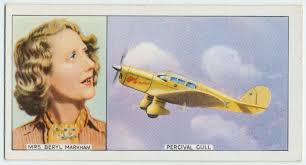
Markham in a conversation with a young man about flying:
When you fly,’ the young man said, ‘you get a feeling of possession that you couldn’t have if you owned all of Africa. You feel that everything you see belongs to you — all the pieces are put together, and the whole is yours; not that you want it, but because, when you’re alone in a plane, there’s no one to share it. It’s there and it’s yours. It makes you feel bigger than you are — closer to being something you’ve sensed you might be capable of, but never had the courage to seriously imagine.’ (KL 1857)


I am even more impressed with Markham's writing.  As I was reading West I kept thinking that her writing was on par with Hemingway and F. Scott (although she only ever wrote this one novel) and then I came across this gem from one of Ernest's letters to a contemporary:

Did you read Beryl Markham's book, "West with the Night"? I knew her fairly well in Africa and never would have suspected that she could and would put pen to paper except to write in her flyer's log book. As it is, she has written so well, and marvelously well, that I was completely ashamed of myself as a writer. I felt that I was simply a carpenter with words, picking up whatever was furnished on the job and some times making an okay pig pen. But this girl who is, to my knowledge, very unpleasant,... can write rings around all of us who consider ourselves as writers. The only parts of it that I know about personally, on account of having been there at the time and heard the other people's stories, are absolutely true. So, you have to take as truth the early stuff about when she was a child which is absolutely superb. She omits some very fantastic stuff which I know about which would destroy much of the character of the heroine; but what is that anyhow in writing? I wish you would get it and read it because it is really a bloody, wonderful book.


I couldn't agree more with Hemingway--this was an incredible and beautiful book-- I place it in my all time TOP 5 best books written.  Markham is a master at the extraordinarily difficult task of capturing and retelling memories and events.  Her excellence shines through, however, in capturing past feelings and sentiments.


Markham on the soul of Africa:
Africa is never the same to anyone who leaves it and returns again.  It is not a land of change, but it is a land of moods and its moods are numberless.  It is not fickle, but because it has mothered not only men, but races, and cradled not only cities, but civilizations--and seen them die, and seen new ones born again--Africa can be dispassionate, warm, or cynical, replete with the weariness of too much wisdom. 



Markham on Africa today and tomorrow:
Today Africa may seem to be that ever-promised land, almost achieved; but tomorrow it may be a dark land again, drawn into itself, contemptuous, and impatient with the futility of eager men who have scrambled over it since the experiment of Eden. In the family of continents, Africa is the silent, the brooding sister, courted for centuries by knight-errant empires — rejecting them one by one and severally, because she is too sage and a little bored with the importunity of it all.


Markham on retreading one's footsteps, i.e.,  'the second time around':
Seeing it again could not be living it again.  You can always rediscover an old path and wander over it, but the best you can then is to say, 'Ah, yes, I know this turning!' --or remind yourself that, while you remember that unforgettable valley, the valley no longer remember you.  

Markham on remembering and silence:

There is the silence of emptiness, the silence of fear, the silence of doubt. There is a certain silence that can emanate from a lifeless object as from a chair lately used, or from a piano with old dust upon its keys, or from anything that has answered to the need of a man, for pleasure or for work. This kind of silence can speak. Its voice may be melancholy, but it is not always so; for the chair may have been left by a laughing child or the last notes of the piano may have been raucous and gay. Whatever the mood or the circumstance, the essence of its quality may linger in the silence that follows. It is a soundless echo. (KL 603-7)


Markham on lions:
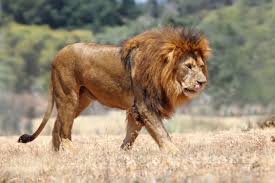
‘Lions are more intelligent than some men,’ he said, ‘and more courageous than most. A lion will fight for what he has and for what he needs; he is contemptuous of cowards and wary of his equals. But he is not afraid. You can always trust a lion to be exactly what he is — and never anything else.’  (KL 705)


Markham on writing:
Silence is never so impenetrable as when the whisper of steel on paper strives to pierce it. I sit in a labyrinth of solitude jabbing at its bulwarks with the point of a pen — jabbing, jabbing. (KL 1764)

Markham on life in Africa:
In Africa people learn to serve each other. They live on credit balances of little favours that they give and may, one day, ask to have returned. In any country almost empty of men, ‘love thy neighbour’ is less a pious injunction than a rule for survival. If you meet one in trouble, you stop — another time he may stop for you. (KL 1832)


Markham on loneliness:
You can live a lifetime and, at the end of it, know more about other people than you know about yourself. You learn to watch other people, but you never watch yourself because you strive against loneliness. If you read a book, or shuffle a deck of cards, or care for a dog, you are avoiding yourself. The abhorrence of loneliness is as natural as wanting to live at all. If it were otherwise, men would never have bothered to make an alphabet, nor to have fashioned words out of what were only animal sounds, nor to have crossed continents — each man to see what the other looked like. (KL 3498)


More on two documentaries/movies made about Markham:

http://www.nytimes.com/1988/05/13/arts/tv-weekend-beryl-markham-a-wonder-in-kenya.html
http://www.nytimes.com/1986/10/08/movies/tv-reviews-world-without-walls-about-beryl-markham.html

Other great books on Africa:

Tuesday, February 14, 2012

Updated Africa FAO book list with new additions!

Updated Africa FAO book list with new additions here.


ATTENTION:  IS THE LIST ABOVE TOO OVERWHELMING?  I'VE PUT TOGETHER  A STARTER READING LIST HERE.

Wednesday, July 20, 2011

Foreign Area Officer (FAO) Reading list updated!

Foreign Area Officer (FAO) Reading list updated!

I have updated my reading list page: http://fuuo.blogspot.com/p/the-fao-africa-book-list.html


Please let me know if you have suggestions that I should add.  My list is still very weak on South American and Europe. 

I am also happy to link to any reviews you might have for any of these books. 

Monday, June 6, 2011

FAO (Africa) Book List

I am always updating this book list so a few times a year I post the entire list as a blog posting (it's always readily accessible on my 'pages' tab).


"There is no FAO book list but THIS FAO book list and FUUO is the messenger of FAO book lists."

   I created this list because there isn't anyone else doing it at an easy to access space and because I LOVE BOOKS!  They are one of my greatest guilty pleasures! While this page is entitled THE FAO Book List, my intent is for it to be useful to any officer working with a certain region.              

       In creating THE list I have borrowed HEAVILY (thanks FAOWeb, AFRICOM and your contributors(COL C among them!) from other lists that I have come across and also relied heavily on my own research.  I have not read all of these books (the ones I have read are noted with a *) but will link them to my reviews once I do read them. 

   If you have suggestions please comment and I will add them.  As I have time I will hyperlink the book titles to their listings on Amazon.  Also, if you have a review/thoughts that you've written that you'd like me to link to I will do so happily.  Comments on books that are not emboldened and italicized are not my own.


ATTENTION:  IS THIS LIST TOO OVERWHELMING?  I'VE PUT TOGETHER  A STARTER READING LIST HERE.


AFRICA

A Hunter’s Wanderings in Africa by Frederick Courteney Selous

A Naturalist in Lake Victoria by G.D. Hale Carpenter


Africa in Chaos by George B. Ayittey


Africa’s Armies: From Honor to Infamy, a History from 1791 to Present by Robert Edgerton, 2002.  Academic study of military trends on the continent.


Devil on the Cross by Ngugi wa Thiong'o

Elimination of Mercenarism in Africa edited by Sabelo Gumedze.   Good luck finding this one on Amazon, but if you email me I will send you a digital (pdf) copy that I have. 


Into Africa, a Guide to Sub-Saharan Culture and Diversity by Yale Richmond and Phyllis Gestrin


In the Heart of Africa by Duke Adolphus Frederick of Mecklenburg


It's Our Turn to Eat by Michaela Wrong.  Recounts the story of John Githongo, who as part of the anti-corruption agency of the Kenyan government, uncovered widespread corruption.

Kim by Rudyard Kipling

Man-Eaters of Tsavo by J.H. Patterson

Politics and Society in Contemporary Africa by Naomi Chazan, et. al. Textbook covering political structures, social dynamics, ethnicity issues.

Queen Victoria’s Little Wars by Byron Farwell, 1972.   Covers British military expeditions in Africa, Asia and China.  Excellent synopsis of interventions in South Africa and Ethiopia.   An entertaining read.


The Africans by  David Lamb, 1987.  Older classic, hilarious, insightful.

The Black Man’s Burden: Africa and the curse of the Nation-State by  Basil Davidson, 1992. Textbook covering nationalism and imposed statehood  issues.

The Dragon's Gift: The Real Story of China in Africa - Hardcover (Jan. 25, 2010) by Deborah Brautigam

The Famished Road by Ben Okri.  This one comes highly recommended!

Meredith

The French Foreign Legion: A Complete History by Douglas Porch, 1991.  Provides a background on French conquests of Benin and Madagascar.  Also illuminates the history and culture of an enduring major actor in African history and current affairs.


The House at Sugar Beach: In Search of a Lost Africa Childhood by Helene Cooper.  Recommended to me by a Navy Africa FAO.  

The Land of Zinj by Captain Stigand


The Penguin Atlas of African History by Colin McEvedy, 1995.  Excellent reference work, good ethnic maps.

The Scramble for Africa: White Man’s Conquest of the Dark Continent from 1876 to 1912 by Thomas Pakenham, 1991.  Dry and long but an excellent explanation of the origins of colonial borders and colonial legacies.

*The Shadow of the Sun by Ryszard Kapuscinski


The Uganda Protectorate by Sir Harry Johnston

The Wretched of the Earth by Frantz Fanon

*The Zanzibar Chest by Aidan Hartley

Things Fall Apart: A Novel by Chinua Achebe  1959. Classic fiction.

Through Masai Land by Joseph Thompson

Travels with a Tangerine by Tim Mackintosh-Smith.  This is a book about Moroccan traveler Ibn Battutah's 29-year pilgrimage from his native Tangiers to Mecca.

Warlord Politics and African States by  William Reno, 1998. Political theory regarding collapsed states.

*What is the What by Dave Eggers.  Lost Boys of Sudan 'memoir.'


Foreign Aid/Peacekeeping/Piracy


Frontline Diplomacy: Humanitarian Aid and Conflict in Africa  by John Prendergast, 1996.  Describes pitfalls in humanitarian aid.

Lords of Poverty: Power , Prestige, and Corruption in the International Aid Business by  Graham Hancock, 1989.  Older classic, still gives insight into aid dynamics.

Mozambique: UN Peacekeeping in Action, 1992-94 by Richard Synge. Recommended to me. 

The Bottom Billion by Paul Collier.  Oxford press, 2007.   Fascinating policy prescription for US approach to Africa.  This will help you understand the debates swirling around in State and USAID.

West Africa

A History of West Africa 1000-1800.  by Basil Davidson, 1977.  Textbook.   Useful reference.

A Long Way Gone: Memoirs of a Boy Soldier  by Ismael Beah, 2007. Liberia, child soldier’s point of view.

Blood Diamonds  by Greg Campbell.  Nonfiction (thus unlike the movie).  History of Sierra Leone’s civil war.

Colonial Conscripts: The Tillailleurs Senegalais in French West Africa 1857-1960 by Myron Echenberg, 1991.  A must read if you’re assigned to French West Africa.

Segu by Maryse Conde.  Historical fiction, West African empires mid-1800’s.

The Mask of Anarchy  by Stephen Ellis, 1999. Liberia.  Part history, part socio-cultural study.

The Trouble With Nigeria  by Chinua Achebe, 1983.  African leadership crisis.

This Child Will Be Great: Autobiography of Ellen Johnson by Sirleaf, 2009. Liberia, Africa’s first female president.  Both insightful and an entertaining read.

This House Has Fallen: Midnight in Nigeria  by Karl Maier, 2000.  Anecdotal treatment of Nigeria.

Central Africa

A Plague of Caterpillars and the Innocent Anthropologist  by Nigel Barley, 1983.  British anthropologist in Cameroon, hilarious, insightful.


King Leopold’s Ghost  by Adam Hochschild, 1998.  Belgian Congo/Zaire, colonial horrors.

Shake Hands with the Devil by Romeo Dalliare. UN Force Commander’s account of the Rwandan genocide.  Explains dynamics of UN C2 during crises and illuminates the genocide from the point of view of someone who was vainly trying to stop it.   Depressing, but a must read nonetheless.

The White Man of God   by Kenjo Jumbam, 2003 (African Writer’s Series).  A Cameroonian village reacts to the arrival of missionaries.

The Wonga Coup  by Adam Roberts, 2006.  True story from Equatorial Guinea, reads like a spy thriller.


We wish to Inform You That Tomorrow We Will Be Killed With Our Families by Philip Gourevitch. Anecdotal treatment of Rwandan genocide.  Influential book for Rye Barcott, author of It Happened on the Way to War: A Marine's Path to Peace (Part I, page 25)

East Africa


Darfur: The Long Road to Disaster by  Burr and Collins, 2006.  Explains the interplay between Chad, Libya and Sudan.   A necessary read if you’re going to one of those three countries.

Imperial Reckoning: the Untold Story of Britian’s Gulag in Kenya  by Caroline Elkins, 2005.   Very good history of the Mau-Mau rebellion.

Infidel  by Ayaan Hirsi Ali, 2007.  Somali-born woman, refugee in Kenya, runs away from a forced marriage in Europe, becomes Dutch parliamentarian and outspoken critic of Islam’s treatment of women.  Easy read and highlights many relevant issues.

Rogue Ambassador: An African Memoir  by Smith Hempstone, 1997. Kenya.
Southern Africa


Angola's Last Best Chance For Peace by Paul Hare.  Recommended to me.  

Birth by Peter Harris.   A gripping account of the turbulent days preceding the first democratic elections in 1994 in South Africa. 

Cry, Beloved Country by Alan Paton.  In search of missing family members, Zulu priest Stephen Kumalo leaves his South African village to traverse the deep and perplexing city of Johannesburg in the 1940s. With his sister turned prostitute, his brother turned labor protestor and his son, Absalom, arrested for the murder of a white man, Kumalo must grapple with how to bring his family back from the brink of destruction as the racial tension throughout Johannesburg hampers his attempts to protect his family. 

Fighting for Justice by Jay Naidoo.  Jay Naidoo was a tireless anti-apartheid campaigner in the 1980s, serving as the first General Secretary of Coastu, South Africa's largest union federation and the backbone of the internal mass struggles against apartheid. In 1993, he stepped down to lead twenty leaders from Cosatu into parliament on an ANC ticket, and was asked by Nelson Mandela to work as the Minister responsible for the Reconstruction and Development Programme, and then as the Minister of Communications. In 1999 Jay moved away from politics and entered the world of business, setting up the J&J Group, an investment and management company. 


Long Walk to Freedom.  Autobiography of Nelson Mandela, 1994.   It’s tough being an Africanist if you don’t know anything about South Africa or its greatest hero.


Mukiwa: A White Boy in Africa  by Peter Godwin.  Growing up during the Zimbabwean war for independence.


The Boer War  by Thomas Pakenham.   Definitive work on the topic.  Thus it’s a bit long.

When A Crocodile Eats the Sun  by Peter Godwin, 2006.  Anecdotal account of Zimbabwe falling apart, 2000-2005.

Culture and Religion-ISLAM

 African Christianity: Its Public Role by Paul Gifford, 1998.  Recent rise of Christianity,

African Religions and Philosophy  by John Mbiti, 1990. Best overview of traditional religions and world view, Ugandan author.
History of Islam in Africa by Levtzion and Pouwels. 
Into Africa: Intercultural Insights  by Richmond and Gestrin, 1998. Best overview of socio-cultural framework, guidebook for living and working with Africans.

The Development of Islam in West Africa  by Mervyn Hiskett, 1984.

The Failure of Political Islam  by Olivier Roy, 1994.   Fundamentalism, integrisme, and extremism. political influence.

Travels with a Tangerine by Tim Mackintosh-Smith.  This is a book about Moroccan traveler Ibn Battutah's 29-year pilgrimage from his native Tangiers to Mecca.


MIDDLE EAST

A History of the Modern Middle East by William L. Cleveland and Martin Bunton


A Political Economy of the Middle East: Third Edition by Alan Richards and John Waterbury


From Beirut to Jerusalem by Thomas L. Friedman


Lawrence Of Arabia by Sir Basil Henry Liddell Hart

 
Ottoman Centuries by Lord Kinross


*The Zanzibar Chest by Aidan Hartley


ASIA PACIFIC
Afghanistan: A Companion & Guide by Bijan Omrani and Matthew Leeming
Non-Fiction – A province by province guide to Afghanistan

Asia Looks Seaward: Power and Maritime Strategy (Praeger Security International) - Hardcover (Nov. 30, 2007) by Toshi Yoshihara and James R. Holmes

Non-Fiction – The two men who went through some significant events in South Asian history.

China's Energy Strategy: The Impact on Bejing's Maritime Policies by Gabriel B. Collins, Andrew S. Erickson, Lyle J. Goldstein, and William S. Murray

China Goes to Sea: Maritime Transformation in Comparative Historical Perspective by Andrew S. Erickson and Lyle J. Goldstein and Carnes Lord


Non-Fiction – Pakistan is their army and their army is Pakistan, understand them and you understand the country

Descent Into Chaos by Ahmed Rashid
Non-Fiction – The latest and greatest on US involvement in Afghanistan & Pakistan

Dragon By The Tail by John Paton Davies

Korea's Place in the Sun: A Modern History, Updated Edition - Paperback (Sept. 19, 2005) by Bruce Cumings

India: A History by John Keay
Non-Fiction – A good once-over on the sub-continent

Non-Fiction – Discover the source and legacy of everything you will see in Bangladesh / South Asia


Non-Fiction – No, you are not the first one to experience what you are about to experience, the more things change the more they stay the same

Shantaram by Gregory David Roberts
Fiction – Excellent primer on South Asian culture, he wished he had read it BEFORE he came there


Non-Fiction – Britain vs. Russia in the 19th century and how it affected (and still affects) Afghanistan and Pakistan 


The Great Partition: The Making of India & Pakistan by  Yasmin Khan Non-Fiction – A tragic story you need to understand

Non-Fiction – One of the earliest MNCs hard at work subjugating South Asia one deal at a time

The Indian Mutiny by Julian Spilsbury
Non-Fiction – 1857: The point when India became run by the UK and not “the company”


The Places In Between by Rory Stewart
Non-Fiction – A walk across Afghanistan from Herat to Kabul post-Taliban, very insightful

The State At War in South Asia by Pradeep P. Barua
Non-Fiction – A good account of South Asia warfare throughout the ages, it will shed light on what their militaries look back on when searching through history for lessons learned.

The Story of the Guides by G.J. Younghusband
Non-Fiction – A unit formed and led by the first FAOs and in the very spot we are mixed up in right now

Three Cups of Tea by Greg Mortenson.  Non Fiction.
*How to run an effective NGO in one of the most inhospitable areas on earth
*My full mixed Amazon review is here.  My one sentence summary: A great story...I just feel bad for his wife and children who played second fiddle.

Wellington in India by Jac Weller
Non-Fiction – The Tipu Sultan and the Battle of Assaye


EUROPE

Anti Americanism by Jean Francois Revel

The French Betrayal of America by Kenneth R. Timmerman

Of Paradise and Power by Robert Kagan 
 An essential read on the EU/US trans-Atlantic relationship. 
The Struggle for Europe by William Hitchcock.

SOUTH/LATIN AMERICA


GENERAL

A Force More Powerful by Peter Ackerman and Jack Duvall


Force and Statecraft by Gordon A. Craig and Alexander L. George


Guns, Germs and Steel by Diamond.  Posits the strong influence of geography on development.


Making War and Building Peace: U.N. Peace Operations by Doyle and Sambanis, 2006.   Statistical analysis of trends leading to success and failure in Peace operations.

*Matterhorn by Karl Marlantes.  My review on Amazon is available here and my full FUUO review is available here.  My two sentence summary:  We spend a disproportionate amount of time studying the facts, tactics, techniques and history of wars. I add this novel to my "must read for FAOs" list because it adds something missing: CONTEXT and TEXTURE.


*The Diplomat’s Dictionary by Chas W. Freeman, Jr.


*The Tipping Point by Malcom Gladwell

The Ugly American by William J. Lederer


CIVIL-MILITARY RELATIONS (from the excellent http://mountainrunner.us/ site)
  • Warriors and Politicians is an excellent book that looks at the unique c-m relationship in the United States. Charlie examines how the military, under dual / dueling masters of the Executive and Legislative branches, developed over the two plus centuries after the Revolution and within parameters established by Founding Fathers, many of whom were military veterans, were wary of a standing army. (Also worthwhile is his more detailed discussion about US Secretaries of Defense in SecDef.)
  • Issues of Democracy: a 1997 US Information Agency (USIA) publication on the importance of civil-military relations in democracy.
  • Center for Civil-Military Relations: it is noteworthy that it is the military itself that dedicates substantial resources to understanding the importance of civil-military relations while the civilian educational system fails to teach the same. (Note the forthcoming book on the CCMR site, Reforming Intelligence, is about Intel and not the military per se.)
  • The Origins of the American Military Coup of 2012: published in 1992 and revised over the years, Charles Dunlap's original portrayal of what happens when the US military decides to protect American society is scary. Turkey's military is known for intervening over the years to protect Kamalism and I've heard some in the US question why the US military doesn't do the same. Read this to understand the importance of a subordinate military.
  • H.R. McMaster's Dereliction of Duty : Johnson, McNamara, the Joint Chiefs of Staff, and the Lies That Led to Vietnam (a valuable read. McMaster is one of the new whiz kids working with Petraeus in Iraq)
If you really want to go academic, then the following will round out the essential reading list: