IMPORTANT NOTE: DON'T CHEAT. DON'T PLAGIARIZE. Notes and Papers are shared here for reference and for studying. Footnote as appropriate.
BONUS LINK: My entire (so far) grad school notes collection can be found here.


By the way--legit deal here below for college students--just in time for the holiday season!
Join Amazon Student FREE Two-Day Shipping for College Students
BONUS LINK: My entire (so far) grad school notes collection can be found here.
By the way--legit deal here below for college students--just in time for the holiday season!
Join Amazon Student FREE Two-Day Shipping for College Students
Jeffrey Herbst,
States and Power in Africa
Summary:
Herbst argues that African leaders (pre, during, and
post-colonization) have all faced similar issues when attempting to rule and
have often came to the same conclusions on how to solve their problems. He compares the formation of African states
to Europe. He claims that the
consolidation of power over distance, as the dependent variable, is affected by
the costs of extending power, the nature
of boundaries, and the nature of the state system. These 3 factors matter in every period.
He wants
to be a thicker structuralist. If everyone makes the same choices due to
environment—then what’s the point of examining individuals though. While Herbst says he’s not geographically
deterministic—he kind of is as he goes on.
Introduction
- Failure of African states to consolidate authority has
resulted in civil wars, refugees, and dysfunctional policies by leaders
- International society still assumes that all African
countries can control all of their territory.
Control = infrastructure + loyalty
Chapter 1 - The Challenge of State-Building in Africa
- It was difficult to project power due to low population
densities in SSA
- Ecological conditions didn't support large
concentrations of people (only 8% of SSA is tropical. Geography
controls population density
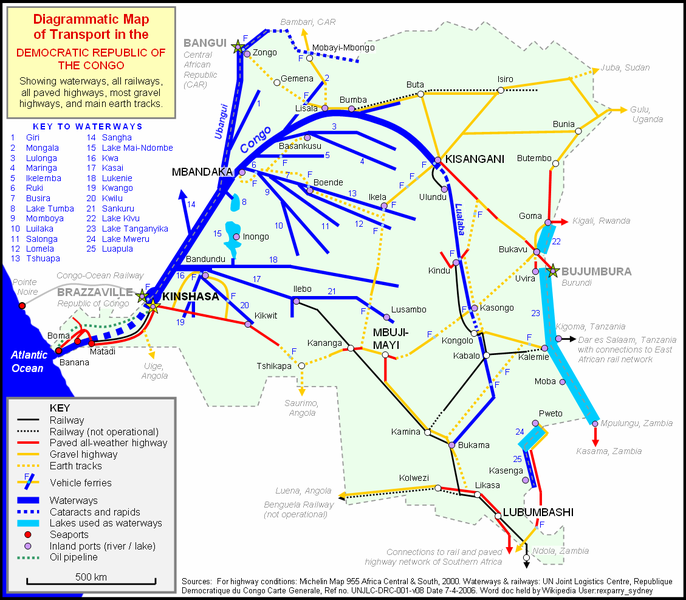
- Difficult to project thru highly differentiated
environmental zones (coastal, forest, savannah, near-desert, etc.)
- Costly to project power due to the same reason
above. The wheel was introduced in
northern Africa during ancient times and abandoned because the terrain and
distances could not be supported with the necessary roads.
- While European nations competed for territory, Africans
had plenty of land that did not propagate conflict. Threat of war in Europe allowed leaders to
place emphasis on controlling remote areas and borders -- Africa did not have
this problem or reason to control its territories. Primary object was to capture people and
treasure, not land which was available to all.
Land was the constant—population was the variable.
- Colonizers were not interested in duplicating European
power infrastructure that bound city to hinterland; Colonial capitals located
on the coast to serve logistical and health needs of colonizers.
- Few roads or telephones in hinterland outside of
extracting goods.
- Nationalist politics in the 50s and 60s were very much
urban affairs.
- After independence, independant countries still had
projection problems
--
Peasants desired to maintain their own decisions about their lives
-- Long
economic crisis since late 70s
-- 69% of
population still live in rural areas
OAU
Chapter 2 - Power and Space in Precolonial Africa
**His nuance in his definition of a state is
important—control over a population instead of borders
- Non-territorial nature of power
- African farmers depended on rain-fed agriculture and
invested little in a particular piece of land; Few pieces of land were valuable
or worth a great price to defend.
- People were not controlled by territory claims and could
escape from rulers rather than fight them.
- Pre-colonial Africa societies unbundled ownership and
control of land.
- Political control had to be earned through loyalty,
coercion, and creation of infrastructure because it was too easy for people to
just leave.
- Roads were vital to exercising formal authority; allow
troop movement, access, etc.
- More cultural diversity due to constrained broadcasting
of power
Detriments of Power
- Often not worth the price of fighting to defend outlying
lands.
- Empires were seen as radiating from the capital cities, decreasing as
distance increased. Some power extended
great distance. On the village level, it
may not extend past the individual village.
- Centralization of power stayed in capitals since weapons
could only be accessed by central state trade with Europeans.
- Benefits of state were shared. If not, people would leave.
Buffer mechanisms to keep people in place were not in
place in Africa. No set of norms to
control inflows of people were established and no official currency (to
maintain physical presence) existed.
Shared sovereignty and multiple state forms due to:
-
physical geography was daunting
- states
had few ways of mediating flow of people or money
- state
system permitted hinterlands to break away or govern themselves
Discussion Points:
How and why colonial state is organized the way it
is?
How’s it different and how’s it the same? What are the implications?
He emphasizes borders despite their artificiality. Clearly colonial state is the basis for today
(example of coastal capital cities).
State system that evolved end up being cooperative instead of
competitive.