I used to fly helicopters for the Navy. Now I work at U.S. embassies to build our mutual security cooperation/defense relationships. I'm also reading a novel from every country in Africa (33 so far). I'm in the process of moving these over to a dedicated website: www.beyondachebe.com.
Most of my non-africa book reviews are now over at www.kruzoo.blogspot.com
"But being right, even morally right, isn't everything. It is also important to be competent, to be consistent, and to be knowledgeable. It's important for your soldiers and diplomats to speak the language of the people you want to influence. It's important to understand the ethnic and tribal divisions of the place you hope to assist." -Anne Applebaum
Showing posts with label reading the continent. Show all posts
Showing posts with label reading the continent. Show all posts
Bound to Violence is an angry novel. In it Malian author Yambo Ouologuem seethes and screams against…everyone. The colonial Europeans, the historic, and seemingly always corrupt, tribal leaders, the pan-Africanists, his buttoned-up Muslim fellow countrymen, the diaspora–no one is safe from his wrath and disgust. Penned 8 years after Malian independence and published in the same year as Moussa Traore’s military coup there, this novel sent shockwaves across the country and a region caught up in burgeoning pan-Africanism. Literary scholar Cherif Keita notes in his introduction that Ouologuem ”was labeled a self-hating black man by both the new African political leaders and the intellectual elite, who felt targeted and lampooned in his novel."
I don’t recommend anyone read the novel. I disliked this novel so much I’ve had a hard time writing up any type of review. But that doesn’t mean that one shouldn’t know about the novel because it covers a lot of philosophical and political ground.
In particular, there are two Henry Miller-esque, extremely lewd and explicit scenes that add nothing to the novel other than shock value. It’s hard to imagine the shockwaves this must have sent when it was published in 1968. Of course, it helped that it was first published in the more sexually “progressive” France where it went on to win the prestigious Prix Renaudot. Note: This literary progressiveness eventually morphed into an insulated literary elitist sickness that was manifested when the committee awarded the prize to an acknowledged pedophile to ‘cheer him up’ in 2013.
Ouloguem was later blacklisted in France when it was revealed large swaths of the novel were plagiarized (without even a hint of attribution)--this public shaming sent the author, who had once only sought to surpass his own father’s achievements, into physical and literary exile in the Malian back country until his death in 2017.
Bound to Violence (or The Work of Violence) is a satirical, very uneven 4-part fictional history of a kingdom called Nakem. Ouologuem uses this construct to mock and dismantle everyone’s attempt to tell and sell Africa (and Mali’s history). His creation was in response to the default global approach to simplify Africa as a whole but also Mali specifically.
And he could only do this by going back about 700 years (thus, part 1).
Part 1: The Legend of the Saïfs
Taking place from the 13th to 19th century, this section addresses the roots of corruption by arguing that it was always present in the societal structure of the Nakem kingdom. His point here is that there was no idealized “peaceful African culture” but rather, he charges, one steeped in violence and the ruthless pursuit of power following the idealized Saif Isaac al-Heit’s death. In short, it stands as a mocking rejection of the Negritude movement.
Part 2: Ecstasy and Agony
This covers the 20th century intersection with french colonialism with corrupt local rulers.The evil ruling Saif offers his son (a la biblical Abraham and Isaac narrative) to become educated in France which is a commentary of the French efforts to whitewash their colonial invasion under the cloak of “improving” local African conditions.
Part 3: The Night of the Giants
Delving deeper into Europe’s collision with the continent, Ouloguem tackles everything from the pre-colonial slave trade to assimilation to the corrupting infection of French society through the journey of Nakem native son Raymond-Spartacus Kassoumi. Educated in France and married to a French woman he ends up as less of a human being than a pawn and object in the Machiavellian machinations of Saif ben Isaac al-Heit and France.
"The life that Raymond lived from that day on was the life of his whole generation—the first generation of native administrators maintained by the notables in a state of gilded prostitution—rare merchandise, dark genius maneuvered behind the scenes and hurled into the tempests of colonial politics amid the hot smell of festivities and machinations—ambiguous balancing acts in which the master turned the slave into the first of the slaves and the arrogant equal of the white master, and in which the slave thought himself master of the master, who himself had fallen to the level of the first of the slaves...."
Part 4: Dawn
More philosophical play than novel, this brief section addresses the intersection of formal religion and tyranny and whether they are mutually dependent. Ouloguem eventually appears to settle, uneasily, on this: "Right without might is a caricature. Might without right is abomination. Admit it."
In his literary efforts Ouloguem’s father loomed large as he noted in writing that “surpassing my father is the only way I can give meaning to my life,'..." "...quest for a personal name..." "...tògò..." "...celebrity..." "...two words, tó nkò, meaning 'to leave behind,'..." "...to triumph over death and gain immortality by leaving to posterity something memorable."
Unfortunately, in his plagiarism-related downfall he embodied the Malian saying that “Words can eat a person.” Ouloguem’s provocative novel brought him both unimaginable glory and stinging estrangement from France and its elite.
Key Excerpts & Analysis
QUOTES are my own pullout, context is AI generated unless otherwise noted.
Page vi
Transcription: "...his unique place as the author of Bound to Violence, the most iconoclastic novel to have come out of Africa." "...the mysterious Dogon of the cliffs of Bandiagara." FOR FURTHER STUDY
Context: Editor Chérif Keïta positions Yambo Ouologuem as a radically disruptive figure who upended post-colonial African literature. By highlighting Ouologuem's roots among the cliff-dwelling Dogon people of Mali, Keïta underscores the tension between isolated traditional cosmologies and the highly public, international literary world Ouologuem would later scandalize.
Page ix
Transcription: "After my unsettling encounter with Yambo Ouologuem that day, I could not help thinking about the Malian saying, 'Words can eat a person,' especially when those words are hard truths spoken too soon, as in Ouologuem’s case, in his brilliant and visionary novel, Bound to Violence. Yambo’s acerbic pen spared no one: neither the former colonizer, France, and the power it was still wielding from Paris, nor the new governments that had taken over in the new African republics, regardless of their alignments in the Cold War world of the 1960s. Because Ouologuem had dared to portray the African masses, which he calls la négraille, as having been systematically victimized by the most ferocious exploitation over centuries, if not millennia, by 'traditional colonizers,' he was labeled a self-hating black man by both the new African political leaders and the intellectual elite, who felt targeted and lampooned in his novel."
Context: This passage captures the structural alienation Ouologuem faced upon the novel's 1968 publication. By utilizing his "acerbic pen" to expose historical exploitation from all sides—foreign imperialists, domestic elites, and traditional African rulers alike—he shattered both the celebratory myths of post-independence nationalism and European expectations, alienating himself from the global literary establishment.
Page x
Transcription: "...whom Ouologuem viewed as puppets of both the former or new European colonial masters and of the local feudal dynasties that managed to perpetuate themselves by enslaving and skillfully mystifying the masses through religion: traditional animism as well as the faith systems imported from the Arab-Muslim East and the Judeo-Christian West."
Context: Ouologuem offers a bleak, unsparing critique of post-colonial power dynamics, explicitly arguing that native political elites act merely as proxy puppets for Western powers. Crucially, he decries religion—whether indigenous animism, Islam, or Christianity—as a highly effective tool utilized by local feudal dynasties to pacify, manipulate, and structurally subjugate the masses.
Page xi
Transcription: "...Africa not unlike other parts of the globe, where sex, greed, and lust for power bred barbarism among humans and turned them into wolves toward one another. Ouologuem simply wanted to prove that Africans are human."
Context: Keïta argues that Ouologuem's graphic depictions of cruelty served a specific humanizing purpose. By stripping away the romanticized, unblemished past championed by some proponents of the Négritude movement, Ouologuem sought to demonstrate that Africans possess a universal human nature—one completely susceptible to the same vices, corruptions, and brutal realpolitik found throughout global history.
Page xii
Transcription: "...'Surpassing my father is the only way I can give meaning to my life,'..." "...quest for a personal name..." "...tògò..." "...celebrity..." "...two words, tó nkò, meaning 'to leave behind,'..." "...to triumph over death and gain immortality by leaving to posterity something memorable."
Context: Keïta contextualizes Ouologuem's artistic fury through the lens of Mande psychology and social structure. His obsessive drive to shatter literary boundaries was fueled by fadenya (father-rivalry)—a cultural imperative to step out from the massive shadow of his colonial-educated father and secure permanent immortality (tògò) by carving an indelible mark into world history.
Page xiii
Transcription: "What do you do when someone attacks your father? You fight that person yourself. You may lose your life, but you do not call on anybody else to fight that fight for you. And what did the French do during World War II? They acted as cowards by failing to safeguard their country and by calling on us and the whole world to go fight [the Nazi invader] for them. You have certainly read in Corneille the story of the Cid. Rodrigue, the hero, avenged by himself the affront his father had suffered. Did he call on the world to help him? No! The French would rather have the Black man die on his behalf to save his own life. And after the Black man had died for them, their way of saying 'Thanks' was to create a [Jacques] Foccart to foment pro-French coups all over Africa."
Context: Quoting Ouologuem directly, this excerpt highlights his profound disgust with French post-war paternalism. Invoking classical French literature (Pierre Corneille's Le Cid), Ouologuem exposes the hypocrisy of an empire that preached rigorous codes of individual honor yet relied on African colonial conscripts (tirailleurs) during World War II, only to later orchestrate covert neocolonial subversion across the continent through figures like Jacques Foccart.
Page xiv
Transcription: "What Ouologuem feared for his continent is sadly on full display today: autocracies, fabricated religious wars, economic distress caused by the new scramble for Africa's resources, the mass exodus of young and old in search of survival. The list is long."
Context: Keïta shifts focus to the contemporary era, illustrating that Ouologuem’s seemingly cynical 1968 descriptions were actually an accurate prophecy. The fictional horrors of the Nakem Empire mirror the modern systemic crises plaguing parts of the post-colonial continent, ranging from entrenched autocracies to neocolonial resource exploitation.
Page xv
Transcription: "...Renaudot Prize..." "...Graham Greene." "...Ouologuem had borrowed and masterfully reworked a few pages from It's a Battlefield by Greene," "...In any case, the young writer was 'eaten by his words,'..." "...André Schwarz-Bart, the award-winning French Jewish writer whose epic of his persecuted people Yambo had adapted for his novel..."
Context: This passage tracks the meteoric rise and catastrophic fall of Ouologuem. After becoming the first African author to win the prestigious Prix Renaudot, his career was destroyed by plagiarism allegations. While his extensive recycling of Western texts (such as Graham Greene and André Schwarz-Bart) was an intentional, experimental technique of pastiche and satirical subversion, the mainstream European publishing establishment weaponized it to discredit his voice, effectively letting his "words eat him."
Page xvi
Transcription: "...English edition continued to be available through the Heinemann African Writers Series..." "...to the literary detectives..."
Context: The foreword concludes by pointing out a telling institutional paradox: while Ouologuem's book was aggressively suppressed and pulled from print in the Francophone world, its English translation remained quietly accessible through Heinemann's African Writers Series for decades, suggesting a calculated political element behind his total cancellation in France.
Page 115
Transcription: "African life, he held, was pure art, intense religious symbolism, and a civilization once grandiose—but now a victim of the white man's vicissitudes. Then, obliged to acknowledge the spiritual aridity of certain manifestations of social life, he fell into a somnolent stupor, no longer capable even of sadness. Having run out of inspiration, he consoled himself by driving down to the Yame in the truck and filming the hippopotamuses and crocodiles."
Context: This scene satirizes European anthropologists—modeled heavily on German ethnologist Leo Frobenius (fictionalized as "Shrobenius"). Ouologuem mocks the Western gaze that romanticizes African life as a static, mystical relic of "pure art," showing that when the reality of African history fails to match the exotic fantasy, the foreign academic simply defaults to a stupor and turns to filming wildlife.
Page 126
Transcription: "...to hear from the mouth of a white man that Africa was 'the womb of the world and the cradle of civilization.'" "In consequence the négraille donated masks and art treasures by the ton to the acolytes of 'Shrobeniusology.' O Lord, a tear for the childlike good nature of the négraille! Have pity, O Lord! ... Makari! makari!"
Context: Ouologuem exposes the economic underbelly of Western cultural appreciation. By flattering African communities with grand academic praise, European researchers successfully extracted literal tons of priceless cultural artifacts and masks for Western museums, turning local heritage into a highly lucrative commercial trade network.
Page 163
Transcription: "But human conflicts have consequences that are at first scarcely discernible; in the perspective of history we see them clearly." [Marginalia: Handwritten letter "Q" in the right margin]
Context: The narrator delivers a historical warning regarding the arbitrary slicing of African borders. This serves as a structural transition into the 1919 Treaty of Paris, highlighting how distant colonial dealmaking and imperial conflict directly plant the seeds for generations of catastrophic, long-term regional instability.
Page 180
Transcription: "The life that Raymond lived from that day on was the life of his whole generation—the first generation of native administrators maintained by the notables in a state of gilded prostitution—rare merchandise, dark genius maneuvered behind the scenes and hurled into the tempests of colonial politics amid the hot smell of festivities and machinations—ambiguous balancing acts in which the master turned the slave into the first of the slaves and the arrogant equal of the white master, and in which the slave thought himself master of the master, who himself had fallen to the level of the first of the slaves...." [Marginalia: Handwritten word "inversion" in the top margin]
Context: This section details the toxic, symbiotic relationship between the colonial state and the newly westernized native intelligentsia. Raymond-Spartacus Kassoumi embodies this elite class—educated in Paris yet remaining dynamic pawns trapped between foreign masters and traditional rulers like Saif, living a life of hollow, "gilded prostitution."
Page 218
Transcription: "...coined at a time when France was floundering in the bloody rice paddies of Indochina: 'Let's drop Asia and keep Africa!'"
Context: This quote captures the blunt, transactional nature of mid-century French imperial policy. Facing a brutal military defeat at Dien Bien Phu, the colonial administration chose to abandon its positions in Southeast Asia specifically to double down on extracting wealth and maintaining control over its African colonies.
Page 220
Transcription: "...splendors of black civilization, and since the World Wars in which black soldiers had burst with violence in the service of France, a cult of the good nigger had arisen, a philistine Negromania without obligation or sanction, akin to those popular messianisms which appeal as much to the white soul enamored of niggerdom as Aunt Jemima's pancakes to the white mouth." [Marginalia: Handwritten word "Irony" in the right margin]
Context: Ouologuem delivers a brilliant, unsparing critique of Western performative guilt. He highlights how Europe readily consumed and praised African aesthetic culture while completely avoiding the real political or economic obligations owed to the colonial soldiers who bled for France, comparing this hollow fascination to a cheap consumer commodity.
Page 222
Transcription: "...it is easier to subjugate a people than to hold it down." "Often, it is true, a man's heart rages and grieves when he sees his country juggling desperately with itself—an immense body in quest of its identity."
Context: The first line cleanly articulates the core mechanics of ideological colonization, showing that systemic, internal pacification is far more sustainable than constant military force. The second line captures the deep psychological trauma of post-colonial statehood, highlighting a nation fractured by centuries of outside interference struggling to form a coherent self-identity.
Page 234
Transcription: "Men kill each other because they have been unable to communicate." "Yet they love each other, because when they separate it dawns on each one that he has spoken only of himself. Have you never missed your target, failed to reach those you love?" "Man is in history, and history is in politics. Politics is cleavage. No solidarity is possible. Nor purity." "Regimes collapse because their politicians don't know how to handle the forge."
Context: During a key conversation with the bishop, the calculating tyrant Saif outlines his raw philosophy of governance. Rejecting any possibility of genuine human solidarity or moral purity, Saif asserts that history is driven by division ("cleavage"), and that a regime's survival depends entirely on its leaders' cold capacity to manage the brutal, volatile "forge" of absolute power.
Page 239
Transcription: "Absurd isn't the same as meaningless. Nature has no meaning, but it's not absurd. It is. The absurd springs from things that destroy and engender one another. It is this concept of the absurd that underlies unjustifiable acts." "Right without might is a caricature. Might without right is abomination. Admit it."
Context: In this final philosophical climax, the dialogue confronts the stark relationship between raw physical force and moral law. By differentiating the meaningless from the absurd, the text unpacks the historical atrocities committed under the Nakem Empire. The final line leaves us with a brilliant, unyielding aphorism on realpolitik: moral legitimacy lacking physical enforcement is an absolute joke, yet sheer physical violence devoid of moral authority remains a complete abomination.
Before Thomas Sankara (aka Africa’s Che Guevera) was installed as president by his then friend Blaise Compaore following a coup, Burkina Faso was called the République de Haute-Volta (Upper Volta). Sankara changed the name of his nation to “Land of the Incorruptible People” and even wrote their national anthem entitled One Single Night. With communist leanings and beliefs, the United States (and specifically the CIA) viewed him as a major threat. As the 1985 Scranage scandal revealed, the CIA was active in various African nations employing spies within their own governments and political parties.
“American Spy” is both a fictionalized telling of Sankara’s downfall and a commentary on what it means to be a black woman in both an American and African society. The novel’s protagonist is a black female FBI agent Marie, haunted by her sister’s death and stifled by the lack of opportunity in her office. When she gets a chance to become a real spy she dives into it but soon realizes that many of her assumptions may have been wrong.
I hesitated to use this on my Reading the Continent List for Burkina Faso because the author is American but I finished this novel impressed by the background it gives on the formation of Burkina Faso as a modern state and its insight into the Burkinabe inner political machinations at a key point in the country’s history. The novel is further valuable for any Africanist in its examination of the effects of US and colonial foreign policy on the continent.
The novel is strongest though examining Marie struggles with Sankara’s charisma and his communist views. Here he pontificates on what the results of colonial power has wrought for Burkina Faso: “Of our seven million inhabitants, over six million are peasants. And this peasantry, our peasantry, has been subjected to the most intense exploitation at the hands of imperialism and has suffered the most from the ills we inherited from colonial society: illiteracy, obscurantism, pauperization, cruelty in many forms, endemic diseases, and famine. Imperialism tries to dominate us from both inside and outside our country. Through its multinational corporations, its big capital, its economic power, imperialism tries to control us by influencing our discussions, and influencing national life.”
Marie listens to his speeches mesmerized by the man, but not convinced ideologically, noting: “The problem with the good he was doing was that it made his Communism palatable. He was too charismatic. Although his country was one of the poorest in the world, he had still managed to galvanize support across the continent. It was worrisome when that happened in countries that had recently become independent. Because they were no longer under the control of a colonial power, there were ideological vacuums in those countries. And I understood the fear that Communism would rush in and fill those voids.”
To her credit, she realizes that “Reaganomics was an unpleasant little philosophy too, and when you added the punitive character of our country to it, we emerged as a breeding ground for a really virulent strain of cruelty. But the alternative was worse.” This struggle gave the novel great appeal to me as it wasn’t a typical white-washing of history and indictment of a leader for his communist ideology--there was self-reflection and growth in the character as she becomes aware that there are no “good” answers--and in her case, the only remotely palatable answers left are messy and sometimes violent.
*One of my Reading Around the Continent books--the full list is here. See our 2020, 2019, 2018, 2017, 2016, 2015 and 2014 Reading Lists. Key Tidbit
Little known fact that Sankara went to the Malagasy ACMIL (Military Academy) in Antsirabe
Key References: National Anthem Chorus (One Single Night) And one single night has drawn together The history of an entire people, And one single night has launched its triumphal march. Towards the horizon of good fortune. One single night has brought together our people With all the peoples of the World, In the acquisition of liberty and progress. Motherland or death, we shall conquer.
It made me think of how much like your father you are. You believe you can correct me, my feelings, purely through the force of your will. That impulse at its most essential is what your father understood love to be. Location 301
followed the Sharon Scranage case particularly closely because she was the only black woman among the eight, and it was the first time an American had been caught spying for an African intelligence outlet. Location 377
But recruiting and running informants was about cultivating their trust. To do that I found it worked best to lie frequently to them. Location 696
I still can’t help but wonder at her. Where had she picked up the idea that she could do anything? Be anything? That the world was so much bigger than Queens? Location 882
That is all a spy does—they hide in plain sight, and once they’ve exploited all they can from their relationships, they leave. Location 938
Being her sister often felt like trying to catch up to someone who was beating you so effortlessly that they weren’t even aware you were trying to compete. Location 1044 accepted that I had to be twice as upright for white folks to think I was half as virtuous. Location 1082
He was the type of guy that, had he been born white, especially if he’d grown up with a little money, would probably have wound up at an excellent business school. Location 1309
Thomas Sankara renamed the country Burkina Faso—the Land of Incorruptible People—and wrote the national anthem. Location 1412
I’d long since stopped feeling obligated to respond to every strange man who spoke to me. Location 1956
“Of our seven million inhabitants, over six million are peasants. And this peasantry, our peasantry, has been subjected to the most intense exploitation at the hands of imperialism and has suffered the most from the ills we inherited from colonial society: illiteracy, obscurantism, pauperization, cruelty in many forms, endemic diseases, and famine.” Location 1961
“Imperialism tries to dominate us from both inside and outside our country. Through its multinational corporations, its big capital, its economic power, imperialism tries to control us by influencing our discussions, and influencing national life.” Location 1977
The problem with the good he was doing was that it made his Communism palatable. He was too charismatic. Although his country was one of the poorest in the world, he had still managed to galvanize support across the continent. It was worrisome when that happened in countries that had recently become independent. Because they were no longer under the control of a colonial power, there were ideological vacuums in those countries. And I understood the fear that Communism would rush in and fill those voids. Location 1983
Reaganomics was an unpleasant little philosophy too, and when you added the punitive character of our country to it, we emerged as a breeding ground for a really virulent strain of cruelty. But the alternative was worse. Location 2097
“The PF doesn’t want to show up to the rally in a chauffeured car,” he said, using a nickname for the president of Faso. Location 2144
understand that black Americans also want their freedom. But Location 2145 don’t confuse real freedom with the freedom of the few to exploit the rest.” Location 2677
“You don’t owe them anything. You give them what you want to give them. But it’s easier if they think you’re one of them. It’s easier to work from the inside. That’s what I try to do. I’ve been a spy in this country for as long as I can remember.” Location 2859
It is humbling to have your social fluency, your sense of yourself as a competent, independent person, upended by a foreign city. Location 2886
would later hear the word disquette used to describe a particular type of Burkinabè girl—one who was as thin as a floppy disk, because that was what appealed to the French men they hoped to marry. One who wore chic, Western clothes, spoke fluent French and maybe even a little English. She could easily have been dismissed as a disquette. But it was a lazy characterization of any woman, and I would come to realize that was especially so in the case of Nicole Ouédraogo. Location 3855
“Slater,” I said, and then I kicked him awake. Although he was still drowsy, his eyes were open when I shot him. Location 4035
The only anger I ever expose to the world is through implication, by suggesting that I’m on the brink of no longer being able to contain my fury. That is what a woman’s strength looks like when it’s palatable: like she is containing herself. Location 4211
just wanted to get one thing, even if it was small, under my control. It was terrifying to lose command over my own body, the only thing that, through all that had happened, I’d remained convinced I could depend on. Labor made me understand that too was an illusion; it was like a trapdoor opening beneath my feet. I can laugh about it now, almost, but at the time it was terrifying. I don’t think I’ve ever been so scared, and it wasn’t the kind of thing I could express to my mother just then. Location 4325
His interest in the law also reflects a belief that it isn’t equitably applied and therefore that he shouldn’t be held to its discretion. I might be cynical, but he’s even more so, because he’s willing to game the system for the right price. Location 4376
I love you. I hope you grow into men who are the best parts of your father and me. I hope that if you’re called to resist injustice you’ll have the courage to do so. I hope you’ll love fiercely and freely. In those ways I hope you’ll be good Americans.
And one single night has drawn together
The history of an entire people,
And one single night has launched its triumphal march.
Towards the horizon of good fortune.
One single night has brought together our people
With all the peoples of the World,
In the acquisition of liberty and progress. Motherland or death, we shall conquer.
Equatorial Guinea is the only Spanish-speaking country in Africa (following 200 years of Spanish rule)--it's also the richest African country you've never heard of per capita (due to the discovery of oil there in the 90's). The level of wealth, however, has been rather opaque due to the brutal dictatorship of "President" Obiang who took power by staging a bloody coup against his own Uncle in the late 70's. Exxon has run most of the country's oil production so despite flagrant human right's abuses, the country has had an on-again-off-again relationship with the U.S..
"By Night the Mountain Burns", however, takes place back during the colonial era on one of the country's neglected islands--the country itself is run from its capital city Malabo on its largest island called Bioko.
It's important to consider the subject matter and themes authors like Laurel choose to address. A frequent critic of Obiango, the self-exiled author tells a tale in this novel of a marginalized community that survives (sometimes) on the narrowest of margins depending on passing European ships and a strange periodic washing ashore of squids. Life on the island revolves around the ocean and the canoes which the entire community bands together to create and which men are buried in when they dide. Superstition also plays a central role as the villagers brutally murder one woman for her suspected role in a fire, and later cholera decimates the population.
To my knowledge this is still the only work of fiction available in English from Equatorial Guinea. The author has since then written about migration in northern Africa (The Gurugu Pledge) and I look forward to more contemporary novels in the future from this small nation.
*One of my Reading Around the Continent books--the full list is here. See our 2020, 2019, 2018, 2017, 2016, 2015 and 2014 Reading Lists. Key Quotes:
And besides, he wasn’t trained to believe in things that weren’t written in books. Location: 1,107
If witnessing the hounding of that woman was the singular thing that made the biggest impression on me, the cholera was what caused me the most tears. Because it took so many of our people … If it had taken one hundred people it would have made a huge dent in the island’s population. But it took a lot more than that. A lot more than one hundred girls and boys, men and women, Location: 1,147
Seeing is a form of taking part, and nobody can claim they didn’t see it. Location: 1506
What’s more, the child was white and I don’t think white people are born to lead such hard lives. Location: 2613
Everybody knew deads weighed more than alives. Some people think what weighs is the sadness, the pain, the immense darkness of their closed eyes. In death, you have to cross a strange, dark wall. You stop being. You’re destined for the blackness, and you let yourself be taken there. You sleep more deeply than a normal person. And all of this weighs. Other people say no one knows what weighs or why death weighs. It just does. Any man transporting a dead should therefore be forewarned, even if, as in this case, the dead person is a small child. Such journeys are special and the canoeman should be mentally prepared, even though he won’t do anything special himself. But on this occasion, the canoeman was not informed. Location: 2642
In Philip Hitti's History of the Arabs, he highlights the long-standing Arab appreciation for oral story-telling and poetry which they call sihr halal. He further describes this ingrained love for "the rhythm, the rhyme, the music, [which] produce on them the effect of what they call "lawful magic" (sihr halal). " In her debut novel Wayetu Moore channels this idea of lawful magic as she joins magical realist authors like Couto, Martel, and Marquez in her telling of an alternative origin story of the Pepper Coast lands that would become Liberia.
In her novel, Moore has decided to focus not on Liberia's historical realities and details but rather on highlighting the people and ideas that would become Liberia. This shift allows the reader to more thoughtfully ponder the roles of justice, religion, and slavery against the backdrop of the most unique colonialist setting on the continent.
Envisioned as an alternative to the emancipation of black slaves in the United States, the west coast African colony began through the efforts of the American Colonization Society (ACS) in 1822. Twenty-five years later it would become an independent nation--Liberia. The entire venture was embroiled in controversy as many freed blacks in the United States viewed this as an affront to their efforts and rights to exist in America. That many members of the ACS were prominent white politicians further served to support this viewpoint.
Like all colonization, Liberia's was rife with bloodshed, betrayal, theft, and violence. The initial land purchase was only successful when the US Navy Lieutenant leading the expedition "encouraged" the local tribe leader King Peter to sell them a tract of land at gunpoint. The colony's further expansion came at the expense of the bordering native villages and tribes over the ensuing century.
That history, however, is not the author's focus--instead she has created the story of three superhumans from three groups who eventually made up the country of Liberia. The first is Norman Aragon, the son of a white colonialist and a free Jamaican woman. He inherits his father's pale skin but his mother's ability to disappear and move invisibly. The second is June Dey, the son of an American slave woman and a ghost. He soon discovers that he has superhuman strength and that bullets and blades have no effect on him. The last is the heroine Gbessa who is outcast from a local Vai tribal village after she is proclaimed a witch as a young girl. She soon finds out that while she can be hurt and feel intense pain she cannot die--she is eternal. Moore weaves the tales of these three lives into an intersection that climaxes as they seek the future of a land and country. This beautiful tapestry will leave a lasting impression on any reader--Africanist or not.
*Audible read so I don't have notes or quotes since the audible app makes it virtually impossible to take notes and highlight sections to which you listen. If you are trying to retain any information, quotes, etc. Audible is the worst. You can highlight and annotate certain portions when you hear them, but there's no export function or way to transfer the highlighted audio sections to text. I would pay money for an app that did this!
This book traces the origin of South Africa and the discovery of gold and diamonds there that sparked off a bloody conflict with Britain that ultimately led to the consolidation and foundation of the apartheid republic that existed until 1994.
This detailed history should be mandatory reading for any budding Africanist. The book also highlights the out-sized role that Cecil Rhodes played in both southern Africa, the diamond industry, and the conflict. The reader also learns the despicable acts that Rhodes committed over the span of his short 49-year life. The main criticism one might find with Meredith's exhaustive history is its decidedly white-western focus. This likely stems from the challenge in finding primary source material which could help better capture more of the African perspective.
Cecil Rhodes
*One of my Reading Around the Continent books--the full list is here.
See our 2020, 2019, 2018, 2017, 2016, 2015 and 2014 Reading Lists.
Author Marc Secchia took a hiatus from his slew of successful fantasy novels to pen this heartfelt love letter to the homeless of Addis Ababa. I tore through this book in less than two days and I’ll warn you that this story will pierce even the hardest heart and (hopefully) change the way you think and interact with the homeless and “least” in your daily life.
“Mister Drainpipe” takes the reader into the mind of a deranged, older homeless man who can no longer recall his past identity and calls himself “Drainpipe” after the dank lodging in which he discovered many years before. When not begging for his daily “injera”, he spends his hours babbling senselessly and scaring women and children. These babblings are interrupted by rare moments of lucidity, however, as he considers the passersby and asks at one point:
Why did people who had so much grow tired of giving a few santimes?
This question frames a narrative that unfolds as part mystery, part searing indictment of how we treat (or totally ignore) the “least of us” in society. Indeed it only takes one small act of kindness, to arrest Drainpipe’s descent into madness and fundamentally change his life’s arc. As the net of generosity grows, Secchia’s Ethiopian characters offer sharp insight into the broader issues of endemic poverty noting that: “until we are able to address the fundamental restoration of human will and dignity, no program, no effort and no intervention, will truly succeed.” These observations land poignantly as they are balanced against the reality of a man for whom no program, effort, or intervention has helped.
Will Drainpipe rediscover and recapture his dignity and past identity? This question is answered against the backdrop of Ethiopia’s history over the past 75 years. One learns not only of the Derg’s genocidal horrors, but also the oblivious Emperor’s rule that let hundreds of thousands perish in famine. This history further covers both the unlikely ascension of Abiy Ahmed to the position of Prime Minister, as well as the efforts of the controversial activist Jawar Mohammed. Along the way, Secchia also treats the foreign reader with cultural insights that both educate and enlighten such as the use of the feminine in greeting between two males to denote a special and close friendship (i.e., Dehna-nesh, my brother?). It’s clear through this story that the author has a heart for not only Ethiopia as a country, but for its people, great and small.
As we follow Drainpipe’s journey, we see the miraculous, contagious power of generosity but we also see the hard work and personal sacrifice it requires. As Drainpipe notes near the story’s end: “it is strange how easily one forgets miracles.”
*One of my Reading Around the Continent books--the full list is here. See our 2019, 2018, 2017, 2016, 2015 and 2014 Reading Lists.
Key Quotes:
But now and again there might be a treasure. A smile. A kind greeting; not the automatic or guilty sort, but a genuine word. A murmured blessing. The brushing of fingertips against his upraised palm to give a coin rather than just to toss it toward his mat. These moments mattered.
Location: 691
Was the whole city one big diseased organ waiting to seize up?
Location: 843
The irony of severe water shortages in a country that supplied an estimated eighty-five percent of the water of the Nile, while Egypt built rice paddies in the desert.
Location: 1,640
History would record something about this year, 1985, in facts and figures and charts. They would agree how awful it all was. People would be unable to believe this had once been a green and fertile land, and too soon, the international news media would turn to another issue. Another need. Another disaster. And these faces would be lost forever.
Location: 1,851
People kissed hands or cheeks all the time when they were especially grateful. Maybe that wasn’t Oromo culture – he did not know – but it certainly was his, just like the shoulder bump signified informality and friendship.
Location: 2,329
And we use the feminine suffix to indicate a special fondness for someone. So I might say dehna-nesh rather than dehna-neh to tell someone that they’re my special friend. Dehna-nesh, my brother?”
Location: 2,490
Inibila, or ‘let’s eat together,’ meant unity. In the same way, Irreecha was a peaceful celebration of the year which had been, a time to thank Waaqa, or God, for one’s blessings. It was meant to be a time of thanksgiving and unity for the Oromo people.
Location: 2,501
“Under brutal suppression during the reign of Menelik II and subsequent regimes, Oromo cultural and religious gatherings were outlawed for over a century. However, in the last decade there has been a concerted revival of important Oromo practises, particularly at the Irreecha religious festival on the shores of Hora Harsadii, or Lake Hora. The deep values underpinning a uniquely Oromo worldview which are celebrated at Irreecha include peace and stability, abundance and provision for life, the preservation of law and order, and protection of the environment. These values describe the Oromummaa, or the core identity of Oromos.”
Location: 2,570
Why did people who had so much grow tired of giving a few santimes?
Location: 2,862
Their cars were 30 to 40 years old and required constant nursing and tinkering. After the Communist revolution, he remembered, cars used to be imported from the USSR – the little Ladas, which were renamed Fiat 131s. Few people could tell the difference, so everyone called them ‘Lada.’ The city’s lifeblood ran blue. The little Ladas were painted a cheerful blue colour with a white roof, as were the bulkier minibus taxis which were licensed to run regular routes in the city. They carried anything and everything on their roofs, from fridges to boxes to the odd goat bound for a family celebration.
Location: 2,979
The bars quietened.
Location: 3,034
‘Until we are able to address the fundamental restoration of human will and dignity, no program, no effort and no intervention, will truly succeed.’
Location: 3,322
Licking his fingertips despite the rudeness of the gesture. He left no portion upon the plate to politely indicate satiation and the host’s excellent provision, but
Location: 3,363
titbits.
Location: 3,395
How could a man mourn for what he had forgotten? Only that his interior felt hollow.
Location: 3,463
What a droll expression. Tafa, was how friends greeted each other after a long separation. ‘You disappeared.’
Location: 3,645
Touching the instrument to his dry, cracked lips, he let the music run through him like a river.
Location: 3,684
Every person, from the lowest to the highest, should be afforded dignity. It’s a travesty of our society that we strip people of self-respect and opportunity, and treat them as outcasts. Dignity is the air and water of life. You need to rediscover your dignity, Tuhbo.”
Location: 4,095
If abstinence made the heart grow fonder
Location: 4,142
“Egzharbier ystillyn. I cannot thank you – how can I thank you? Egzharbier ystillyn … it still doesn’t say enough.”
Location: 4,248
Midday was not the hottest time of the day, but rather nine in the afternoon, according to Ethiopian time-telling which counted dawn as the ‘zero’ and midday as the sixth hour. Foreigners would say three o’clock.
Location: 4,393
And then came Nelson Mandela – did you know he has an Ethiopian passport? He received it in 1962 under the name of David Motsamayi, when he trained here in our country in guerrilla warfare.
Location: 4,430
and now he vividly recalled watching Timket in Gondar at Fasiledes’ Bath, a unique ceremony where the Orthodox believers leaped fully clothed into the waters of a huge pool surrounding that small medieval castle.
Location: 4,471
Toxic history required healing.
Location: 4,501
Tuhbo remembered the legend of the negarit, the great Ethiopian drum hollowed out of a baobab tree that was meant to be heard fifty kilometres away!
Location: 4,559
Always rumours, or wiray in Amharic, the word-of-mouth that often served best – or worst when the media was tightly controlled and real journalism, curtailed.
Location: 4,688
Some stones were only ever lifted by laughing at oneself.
Location: 4,771
“Y’zare injerachinen,” she agreed, quoting from the Lord’s Prayer. Our daily injera.
Location: 4,776
Fikir Indegena – Love Again.
Location: 4,813
He used the Amharic form meliaki, my angel, the fonder, more personal term – a term sometimes used as a nickname or endearment between lovers.
Location: 4,937
But it is strange how easily one forgets miracles.
Following the conclusion of World War II, Mussoloni (as the Ethiopians derisively referred to him) concocted a plan to give himself a slice of the colonial pie while simultaneously avenging his country’s late 19th century embarrassment at the Battle of Adua.
Kidane, the military leader in “The Shadow King” remarks to his men that the Italians “have come to rewrite history, to alter memory, to resurrect their dead and refashion them as heroes.”
At exiled Emperor Haile Selassie’s behest, Kidane assembles a local militia to fight against the invading forces. His wife Aster leads the women who trail the fighters, supplying them with food, bullets, and equipment. As Kidane’s forces suffer battlefield losses, Aster eventually convinces him to let her women fight. A character equal parts cruel and inspirational, Aster implores her fellow women to take their place in history and fight. Her servant, and narrator, Hirut describes Aster’s fervor: “She is one woman. She is many women. She is all the sound that exists in the world.”
And so the women fight and author Mengiste brings to light a forgotten and ignored piece of Ethiopia’s famed resistance against Italy. “I see you. I will always see you” the author remarks in the novel’s acknowledgements to the women of Ethiopia who would not let themselves be forgotten. The novel does not shirk away from the violence of not only war but of the Ethiopian society for women. Early on in the story, Kidane’s father notes that “somewhere, a woman is always weeping” because no matter who the victor is in a conflict, the mothers, daughters, and sisters bear the brunt of loss, injury, and death.
As the story unfolds, the Ethiopians fighters notice that one of their own bears a striking resemblance to the Emperor and decide to dress him as a “shadow king” in order to inspire the surrounding towns to mobilize and actively fight against the invaders. With periodic chapters imagining the helpless emperor in England, it quickly becomes apparent that he is less a king than his countrywomen fighting back in Abyssinia. Later in life, having survived not only a cruel stint as a prisoner of war but the war itself, Hirut realizes that “we were the Shadow King. We were those who stepped into a country left dark by an invading plague and gave new hope to Ethiopia’s people.” "Plague" is an apt description for the Italian invaders as Mengiste lays bears the range of horrifying atrocities committed from searing mustard gas attacks to the ritual tossing of women and children prisoners off of a cliff. These acts are all captured and framed through the eyes of Italian photographer/reluctant solider Ettore. While his commander Fucelli orders him to document these horrors, Ettore readily acknowledges his guilt as he recalls the words of his father: "we must all suffer our consequences."
Finally, I can’t end this review without remarking on the talent of author Maaza Mengiste. I first read her debut novel “Beneath the Lion’s Gaze” last year and was struck by her writing’s beauty. Her talent has continued to grow and it’s evident as she pens stunning lines like:
“The sun highlights the hints of henna in Aster’s braided hair. It splashes a glow across her cheeks. Her eyes are liquid in the bright light.”
“[Selassie] stands beneath a soft drizzle that feels like a weeping sky.”
“But she cannot know that grief cradles at the beast of cruelty, and it hungers for more, and she is for the taking.”
*One of my Reading Around the Continent books--the full list is here. **See our 2019, 2018, 2017, 2016, 2015 and 2014 Reading Lists. Read my review of Mengiste's other novel: "Beneath the Lion's Gaze" "Prevail" is a comprehensive history of Ethiopia's fight against Italy, my review of it is here.
Key Quotes:
23-4 “What’s lost is gone, my child, what is lost makes room for something else.” Berhe to Hirut as she mourns her rifle’s loss.
34 “Hirut recognizes for the first time that some memories should be barricaded by others, that those strong enough must hold the others at bay.”
89 “They have come to rewrite history, to alter memory, to resurrect their dead and refashion them as heroes.” Kidane on Italian motives as they seek to avenge their loss at Adua in 1896.
93 “He stares as if he wants to charge, as if he understands the camera’s weakness. As if he already knows the difference between what one sees and what is true. He is the only one whose mouth turns up on one side in both a smile and in mockery.” Aklilu, lover of Hirut in one of the pictures.
101 “The sun highlights the hints of henna in Aster’s braided hair. It splashes a glow across her cheeks. Her eyes are liquid in the bright light.”
112 “She is one woman. She is many women. She is all the sound that exists in the world.” Aster as she implores the women to rally to support the their soldiers.
114 “We’re more than this...we’re more than this...we’re more than this...we’re more than this.” Aster’s words to her fellow women as she implores them to realize their destiny to rise above their station and society’s expectation to them.
116 “Who remembers what it means to be more than what this world believes of us?” Aster’s final words in speech to her fellow women.
119 “And so somewhere, a woman is always weeping.” Kidane’s father on the cost of war and death.
133 “There is nothing that can come from this but blood and more blood.” Ettore
139 “But she cannot know that grief cradles at the beast of cruelty, and it hungers for more, and she is for the taking.” Chorus as Hirut is discovered in camp with her stolen rifle.
168 “That the dead are stronger. That they know no physical boundaries. They reside in the corners of every memory and rise up, again and again, to resist all our efforts to leave them behind and let them rest.” Hirut considers death in war.
173 “Yibeqal. We’ve had enough.” Mussolini’s words that Selassie that repeats to himself as he resolves to fight.
191 “She once believed she belonged to herself.” Hirut after Kidane rapes her and Aklilu finds her unable to move.
214 “As soon as a country builds an empire, he says, it has to decide who is who.” Fucelli on Italy’s descent into nazism.
237 “All you have to do is sit on the horse, Hirut says to him. She has to stop herself from patting his arm. We will all stand in the shadow of your light, she adds, repeating what Aster told her: To be in the presence of our emperor is to stand before the sun
272 “To kill: to make dead, to extinguish life, to murder. Ghostly apparitions have been trudging past him since the night before, motioning him back to Ethiopia: Haile Selassie, Jan Hoy, Teferi, we’re waiting. Where have you gone? Teferi, Haile Selassie, come home.” Imagined thoughts of the Emperor as he sits in England and hears of the Italian atrocities against women and children.
297-98 “We must all suffer our consequences.” Ettore’s father tells his mother as a baby.
298 “It is the land the carries our suffering when we die. It is the land that remains the same, no matter what we call ourselves. And what he meant, Lev would later learn, was this: that only soil will remember who we are, nothing but earth is strong enough to withstand the burden of memory.” Ettore’s grandfather’s advice to his son as they flee Odessa for Italy.
317 “She lets herself disappear until all that remains on that bloodstained bed is a girl remolding herself out of a rage.” Aster described after her wedding night but also speaking to the role of women in the society writ large.
318 “He stands beneath a soft drizzle that feels like a weeping sky.” Selassi described in England.
351 “Knowing only he will ever see the way hatred sways so easily between shame and fear.” Ettore as he watches the eyes of Hirut as Fucelli beats her.
402 “Every sun creates a shadow and not all are blest to stand in the light.” Minim, the shadow king as he returns to normal life following his service in the war.
423 “We were the Shadow King. We were those who stepped into a country left dark by an invading plague and gave new hope to Ethiopia’s people.” Hirut thinks as she hands Ettore the letter from his father.
428 “I see you. I will always see you.” the author in her acknowledgements to the women of Ethiopia who would not let themselves be erased.
Key Takeaways
6 Dead must be heard and known--that is the primordial call that Mengiste answers in this novel.
28 The memory of war and taking lives irrevocably changes one.
99 Aster mimics courage in order to foster it in her self.
119 The true cost of war is always born by women--no matter the victor--mothers, wives, sisters, lovers.
132 Ethiopians would purposely mispronounce Mussolini’s last name as: Mussoloni
180 Emperor’s command from abroad to Kidane to risk everything
190/226 In an awful rape scene (Kidane raping Hirut) shows further demarcation of class, power, worth, male dominance. His intrusion--his rape of her--forces her to vacate her own body. We later see her victory through indifference--through her detachment from the brutal act he tries to perpetrate upon her.
191 Aklilu’s love after the rape helps to restore her dignity as he feeds her.
219 More an observation: the sharp intake of air when Ethiopians speak
232 The notion of a shadow kings and shadow queens is rooted in Ethiopian and broader mythology and provides an arc of hope in the novel
241 Names of the emperor: Jan Hoy, Negus Nagast, Abbatachin, Haile Selassie, Ras Teferi Mekkonen, King of Kings--these names flow through the head of Hirut as she emerges of the bodygrad of the Shadow King
272 Italian horrors against women and children reach Emperor in England, where he is surviving in the shadows. In this case, the actual Emperor is perhaps the actual shadow king referred to in the book’s title for he is only the shadow of a ruler, impotent and powerless.
292 Jewish racism just provokes further descent into depravity as Ettore is left with what he deems to be little choice. This also shows that the evils are racism are a spectrum that eventually consumes everyone.
293 Even as the Italians toss Ethiopian children off the cliff to their death, they maintain their honor in the pronouncement of their names. They have a name!.
315 Wow, balance of societal order is ingrained in Hirut’s understanding of the world as she is appalled that brutality can reach the body of Aster (reminiscent of Coates’ notion of “the body” in “Between the world and me.”
410 The costs of war--Ettore’s life is eternally and irrevocably damaged and ruined.
I sped through it in three heady days, finishing the last third of the book in a marathon nighttime session tucked in bed next to my sleeping wife.
I couldn’t put the book down.
Reading Gael Faye’s “Small Country”, I was reminded of the writing of other writers such as Teju Cole, Dinaw Mengestu, Maaza Mengiste, Noviolet Bulawayo, and poets like Frank Chipasula, Atukwei Okai, and K'naan. Faye writes with a musician’s flair (and indeed he was a well known rapper/musician before becoming an author), penning lines like: “And when he laughed, happiness washed over the walls of Mamie’s small living room like a fresh lick of paint.”
“Small Country” is one of the first novels (i.e., fiction) about the Rwandan genocide and was translated into English in 2018 after winning the 2016 Prix Goncourt des Lycéens. In my effort to read a novel from every country in Africa I’ve categorized it under Burundi, however, because that is where the main characters live and the location through which the themes of exile and displacement are examined.
At the end of the book, Gabriel reflects that “I used to think I was exiled from my country. But, in retracing the steps of my past, I have understood that I was exiled from my childhood. Which seems so much crueler.” This summarizes well the crux of the story, Gabriel is Rwandan-French but spends his entire childhood in neighboring Burundi until the effects of the 1994 Rwanda genocide push him even further away to France. It’s there that he considers what exactly he’s lost and finally finds the courage to return and makes a heart-breaking discovery.
Serendipitously, in writing this review of “Small Country”, I discovered the music of the author and its terrific. In fact, he even made a companion video of sorts to the novel which you can see below. Also, they are finishing up a movie version of the book!
*One of my Reading Around the Continent books--the full list is here. **See our 2019, 2018, 2017, 2016, 2015 and 2014 Reading Lists.
Key Takeaways: On Genocide, War, and the Death of Childhood: But for the time being, our country was like a barefoot zombie walking over sharp stones, its parched tongue hanging out. We had grown used to the idea of dying at any moment. Death was no longer something distant and abstract. It was the banal face of our everyday existence. Living with this kind of clarity laid waste to what was left of our childhood...I used to think I was exiled from my country. But, in retracing the steps of my past, I have understood that I was exiled from my childhood. Which seems so much crueler.
On Memory and Poetry: Poetry may not be news. But it is all that human beings retain from their journey on this earth.
On Nationalism: Not one of them fails to ask me the same nagging question, and it’s always on our first date: “So, where are you from?” A question as mundane as it is predictable. It feels like an obligatory rite of passage, before the relationship can develop any further. My skin—the color of caramel—must explain itself by offering up its pedigree. “I’m a human being.” My answer rankles with them. It’s not that I’m trying to be provocative. Any more than I want to appear pedantic or philosophical. But when I was just knee-high to a locust, I had already made up my mind never to define myself again. On the inevitability of violence: We were living on the axis of the Great Rift, at the precise spot where Africa fractures. The people of this region mirrored the land. Beneath the calm appearance, behind the facade of smiles and optimistic speeches, dark underground forces were continuously at work, fomenting violence and destruction that returned for successive periods, like bad winds: 1965, 1972, 1988. A glowering, uninvited ghost showing up at regular intervals to remind us that peace is merely a brief interlude between two wars. This poisonous lava, the thick flow of blood, was ready to rise to the surface once more. On Classical Music and Coups: Later on, I discovered that it was traditional to play classical music during a military coup. On November 28, 1966, for Michel Micombero’s coup, it was Schubert’s piano sonata No. 21; on November 9, 1976, for Jean-Baptiste Bagaza’s coup, it was Beethoven’s 7th symphony; and on September 3, 1987, for Pierre Buyoya’s coup, it was Chopin’s Bolero in C major. On this day, October 21, 1993, we were treated to Wagner’s Twilight of the Gods.
On the Impossibility of Neutrality: I couldn’t explain this cruel shift, this tangible sense of confusion. That is, until break-time one day, when two Burundian boys started fighting behind the main playground, hidden from the view of teachers and supervisors. The other Burundian students, wading into the hot waters of the dispute, promptly divided into two groups, each supporting one of the boys. “Filthy Hutus!” shouted one side. “Filthy Tutsis!” replied the other. That afternoon, for the first time in my life, I entered the dark reality of this country. I was a direct witness to Hutu–Tutsi antagonism, the line that could not be crossed, forcing everyone to belong to one camp or the other. This camp was something you were born with, like a child’s given name, something that followed you forever. Hutu or Tutsi. It had to be one or the other. Heads or tails. From that day on, I was like a blind person who had regained their sight, as I began to decipher people’s body language and glances, words left unspoken and ways of behaving that had previously passed me by. War always takes it upon itself, unsolicited, to find us an enemy. I wanted to remain neutral, but I couldn’t. I was born with this story. It ran in my blood. I belonged to it. On Colonial Empathy: “Africa, what a waste!” cursed Jacques, pouring himself another stiff glass of whiskey.
On Perseverance: “Tomorrow, the sun will rise and we shall try again,”
On the Music of War: While we were arguing, far off, up in the hills, we could hear the AMX-10 tanks firing. Over time, I had learned to recognize their notes in the musical stave of war that surrounded us. There were evenings when the noise of weapons blended into the birdsong or the call of the muezzin, and I found such beauty in this peculiar soundscape that I forgot myself entirely.
On War: Perhaps this was what war meant: understanding nothing.
On Identity: If you come from a country, if you are born there, as what might be called a native by birthright, well then, that country is in your eyes, your skin, your hands, together with the thick hair of its trees, the flesh of its soil, the bones of its stones, the blood of its rivers, its sky, its flavor, its men and women…
“So…why are they at war?” “Because they don’t have the same nose.”
Location: 90
I am haunted by the idea of returning. Not a day goes by without the country calling to me.
Location: 94
Except that I no longer live anywhere. Living somewhere involves a physical merging with its landscape, with every crevice of its environment. There’s none of that here. I’m passing through. I rent. I crash. I squat. My town is a dormitory that serves its purpose. My apartment smells of fresh paint and new linoleum. My neighbors are perfect strangers, we avoid each other politely in the stairwell.
Location: 101
Not one of them fails to ask me the same nagging question, and it’s always on our first date: “So, where are you from?” A question as mundane as it is predictable. It feels like an obligatory rite of passage, before the relationship can develop any further. My skin—the color of caramel—must explain itself by offering up its pedigree. “I’m a human being.” My answer rankles with them. It’s not that I’m trying to be provocative. Any more than I want to appear pedantic or philosophical. But when I was just knee-high to a locust, I had already made up my mind never to define myself again.
Location: 131
Poetry may not be news. But it is all that human beings retain from their journey on this earth.
Location: 140
But Maman was head and shoulders above him—even her ankles were legendary!
Location: 158
In those happy times, if anyone asked me, “Life’s good?” I would always answer: “Life’s good!” Wham-bam. When you’re happy, you don’t think twice about it. It was only afterward that I began to consider the question.
Location: 168
Burundian restraint gave way to Zairean commotion.
Location: 185
we arrived in Bukavu—a sort of Garden of Eden on the banks of Lake Kivu and an art deco relic of a town that had once been Futurist.
Location: 220
“The last time I was in Belgium, the docs told me to give up the smokes or I was done for. There’s nothing I haven’t been through here: wars, looting, shortages, Bob Denard and Kolwezi, thirty years of bloody ‘Zairinization,’ and it’s the cigarettes that’ll get me in the end! Goddamn
Location: 238
At least with the Zaireans, they’re easy to understand: you just pay the bribe.
Location: 301
started singing “Sambolera.” Maman joined in. There was a beautiful quality to her voice, one that touched your soul, triggering as many goosebumps as the air-con. It made you want to pause the cassette and only listen to her.
Location: 629
And when he laughed, happiness washed over the walls of Mamie’s small living room like a fresh lick of paint.
Location: 702
And yet they were both talking about the same thing. Returning to their country. One belonged to history, the other was tasked with making history happen.
Location: 1,141
A warm downpour was about to come crashing down on us, so violently that we would run to collect the tables, chairs and plates before sheltering under the safety of our barza to watch the party dissolving in a cloudburst. Soon my birthday would be over, but I chose to savor that minute before the rain came down in earnest, that taste of suspended happiness as music joined our hearts and filled the space between us, celebrating life, this moment in time, the eternity of my eleven years, here, beneath the cathedral that was the rubber fig tree of my childhood, and deep down I knew that everything would turn out all right.
Location: 1,188
We were living on the axis of the Great Rift, at the precise spot where Africa fractures. The people of this region mirrored the land. Beneath the calm appearance, behind the facade of smiles and optimistic speeches, dark underground forces were continuously at work, fomenting violence and destruction that returned for successive periods, like bad winds: 1965, 1972, 1988. A glowering, uninvited ghost showing up at regular intervals to remind us that peace is merely a brief interlude between two wars. This poisonous lava, the thick flow of blood, was ready to rise to the surface once more. We didn’t know it yet, but the hour of the inferno had come, and the night was about to unleash its cackle of hyenas and wild dogs.
Location: 1,217
Later on, I discovered that it was traditional to play classical music during a military coup. On November 28, 1966, for Michel Micombero’s coup, it was Schubert’s piano sonata No. 21; on November 9, 1976, for Jean-Baptiste Bagaza’s coup, it was Beethoven’s 7th symphony; and on September 3, 1987, for Pierre Buyoya’s coup, it was Chopin’s Bolero in C major. On this day, October 21, 1993, we were treated to Wagner’s Twilight of the Gods.
Location: 1,240
They’re too much, those colonial settlers! Their pets’ lives matter more to them than human ones. Anyway, I’d better get going, Gaby. More news in the next update.”
Location: 1,261
For privileged children like us, who lived in the city center and in residential neighborhoods, war was just a word.
Location: 1,373
I couldn’t explain this cruel shift, this tangible sense of confusion. That is, until break-time one day, when two Burundian boys started fighting behind the main playground, hidden from the view of teachers and supervisors. The other Burundian students, wading into the hot waters of the dispute, promptly divided into two groups, each supporting one of the boys. “Filthy Hutus!” shouted one side. “Filthy Tutsis!” replied the other. That afternoon, for the first time in my life, I entered the dark reality of this country. I was a direct witness to Hutu–Tutsi antagonism, the line that could not be crossed, forcing everyone to belong to one camp or the other. This camp was something you were born with, like a child’s given name, something that followed you forever. Hutu or Tutsi. It had to be one or the other. Heads or tails. From that day on, I was like a blind person who had regained their sight, as I began to decipher people’s body language and glances, words left unspoken and ways of behaving that had previously passed me by. War always takes it upon itself, unsolicited, to find us an enemy. I wanted to remain neutral, but I couldn’t. I was born with this story. It ran in my blood. I belonged to it.
Location: 1,477
Christian gave me a mischievous look as he raised his eyebrows and shimmied his shoulders like an Ethiopian dancer.
Location: 1,628
For the second time in my life, I had overcome my miserable fear. One day I would leave behind that crippling burden.
Location: 1,704
From April to July 1994, at a distance and between four walls, next to a telephone and a radio, we lived through the genocide that was being perpetrated in Rwanda.
Location: 1,752
“Yeah, I’m from Zaire, but I’m a Zairean Tutsi.” “Get that, you learn something new every day!” “They call us the Banyamulenge.”
Location: 1,816
and, for some time now, men had been able to kill other men with absolute impunity, under the same midday sun as before.
Location: 1,864
“Africa, what a waste!” cursed Jacques, pouring himself another stiff glass of whiskey.
Location: 1,885
God makes us undergo these ordeals so we can prove to him that we don’t doubt him. It’s as if he’s telling us that great love relies on trust.
Location: 1,888
“Tomorrow, the sun will rise and we shall try again,”
Location: 1,924
While we were arguing, far off, up in the hills, we could hear the AMX-10 tanks firing. Over time, I had learned to recognize their notes in the musical stave of war that surrounded us. There were evenings when the noise of weapons blended into the birdsong or the call of the muezzin, and I found such beauty in this peculiar soundscape that I forgot myself entirely.
Location: 2,014
It’s taken me a long time to write to you. I’ve been very busy recently, trying to stay a child.
Location: 2,048
“Gaby,” she asked eventually, looking up at me, “why did Maman accuse us of having killed our family in Rwanda?” I had no answer to give my little sister. I had no explanation for the deaths of some and the hatred of others. Perhaps this was what war meant: understanding nothing.
Location: 2,052
But for the time being, our country was like a barefoot zombie walking over sharp stones, its parched tongue hanging out. We had grown used to the idea of dying at any moment. Death was no longer something distant and abstract. It was the banal face of our everyday existence. Living with this kind of clarity laid waste to what was left of our childhood.
Location: 2,203
Even after closing the heavy gates, I could hear her voice behind me, still lavishing me with never-ending wisdom: take care in the cold, look after your secrets, may you be rich in all that you read, in your encounters, in your loves, and never forget where you come from… When we leave somewhere, we take the time to say goodbye: to the people, the things, and the places that we’ve loved. I didn’t leave my country, I fled it. The door was wide open behind me as I walked away, without turning back. All I can remember is Papa’s small hand waving from the balcony of the airport at Bujumbura.
Location: 2,221
If you come from a country, if you are born there, as what might be called a native by birthright, well then, that country is in your eyes, your skin, your hands, together with the thick hair of its trees, the flesh of its soil, the bones of its stones, the blood of its rivers, its sky, its flavor, its men and women…
Location: 2,227
I used to think I was exiled from my country. But, in retracing the steps of my past, I have understood that I was exiled from my childhood. Which seems so much crueler.


 Before Thomas Sankara (aka Africa’s Che Guevera) was installed as president by his then friend Blaise Compaore following a coup, Burkina Faso was called the République de Haute-Volta (Upper Volta). Sankara changed the name of his nation to “Land of the Incorruptible People” and even wrote their national anthem entitled One Single Night. With communist leanings and beliefs, the United States (and specifically the CIA) viewed him as a major threat. As the 1985 Scranage scandal revealed, the CIA was active in various African nations employing spies within their own governments and political parties.

 ) and I look forward to more contemporary novels in the future from this small nation.


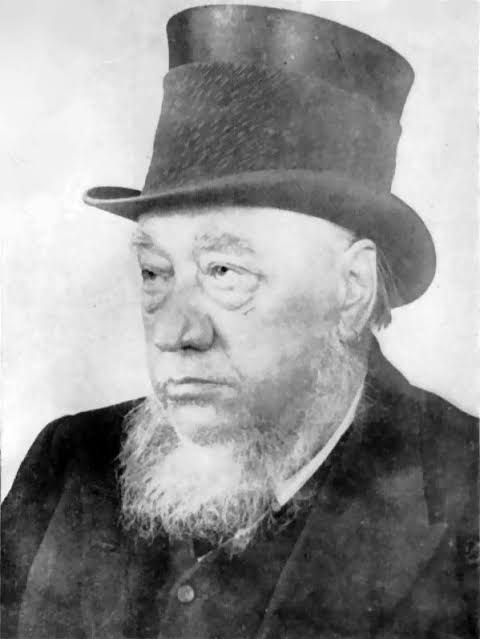

 Author


 One of the best books that I read this year.