One of the best books that I read this year.
I sped through it in three heady days, finishing the last third of the book in a marathon nighttime session tucked in bed next to my sleeping wife.
I couldn’t put the book down.
Reading Gael Faye’s “Small Country”, I was reminded of the writing of other writers such as Teju Cole, Dinaw Mengestu, Maaza Mengiste, Noviolet Bulawayo, and poets like Frank Chipasula, Atukwei Okai, and K'naan. Faye writes with a musician’s flair (and indeed he was a well known rapper/musician before becoming an author), penning lines like: “And when he laughed, happiness washed over the walls of Mamie’s small living room like a fresh lick of paint.”
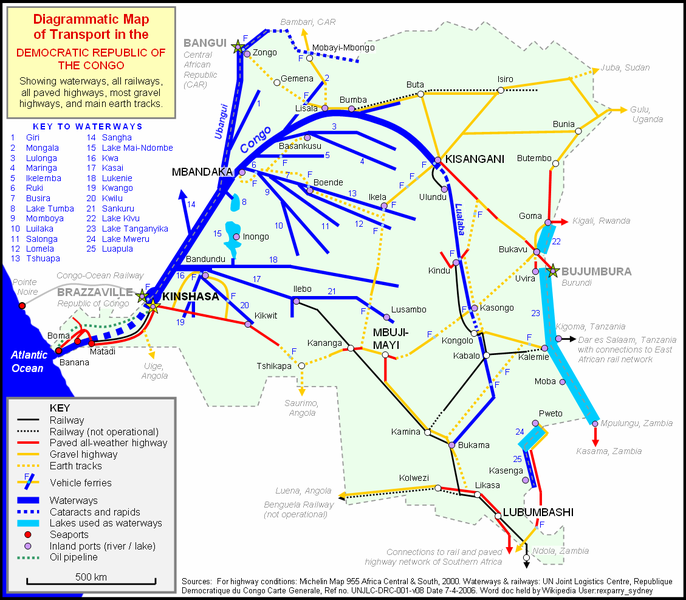
“Small Country” is one of the first novels (i.e., fiction) about the Rwandan genocide and was translated into English in 2018 after winning the 2016 Prix Goncourt des Lycéens. In my effort to read a novel from every country in Africa I’ve categorized it under Burundi, however, because that is where the main characters live and the location through which the themes of exile and displacement are examined.
At the end of the book, Gabriel reflects that “I used to think I was exiled from my country. But, in retracing the steps of my past, I have understood that I was exiled from my childhood. Which seems so much crueler.” This summarizes well the crux of the story, Gabriel is Rwandan-French but spends his entire childhood in neighboring Burundi until the effects of the 1994 Rwanda genocide push him even further away to France. It’s there that he considers what exactly he’s lost and finally finds the courage to return and makes a heart-breaking discovery.
Serendipitously, in writing this review of “Small Country”, I discovered the music of the author and its terrific. In fact, he even made a companion video of sorts to the novel which you can see below. Also, they are finishing up a movie version of the book!
*One of my Reading Around the Continent books--the full list is here.
**See our 2019, 2018, 2017, 2016, 2015 and 2014 Reading Lists.
Key Takeaways:
On Genocide, War, and the Death of Childhood: But for the time being, our country was like a barefoot zombie walking over sharp stones, its parched tongue hanging out. We had grown used to the idea of dying at any moment. Death was no longer something distant and abstract. It was the banal face of our everyday existence. Living with this kind of clarity laid waste to what was left of our childhood...I used to think I was exiled from my country. But, in retracing the steps of my past, I have understood that I was exiled from my childhood. Which seems so much crueler.
On Memory and Poetry: Poetry may not be news. But it is all that human beings retain from their journey on this earth.
On Nationalism: Not one of them fails to ask me the same nagging question, and it’s always on our first date: “So, where are you from?” A question as mundane as it is predictable. It feels like an obligatory rite of passage, before the relationship can develop any further. My skin—the color of caramel—must explain itself by offering up its pedigree. “I’m a human being.” My answer rankles with them. It’s not that I’m trying to be provocative. Any more than I want to appear pedantic or philosophical. But when I was just knee-high to a locust, I had already made up my mind never to define myself again.
On the inevitability of violence: We were living on the axis of the Great Rift, at the precise spot where Africa fractures. The people of this region mirrored the land. Beneath the calm appearance, behind the facade of smiles and optimistic speeches, dark underground forces were continuously at work, fomenting violence and destruction that returned for successive periods, like bad winds: 1965, 1972, 1988. A glowering, uninvited ghost showing up at regular intervals to remind us that peace is merely a brief interlude between two wars. This poisonous lava, the thick flow of blood, was ready to rise to the surface once more.
On Classical Music and Coups: Later on, I discovered that it was traditional to play classical music during a military coup. On November 28, 1966, for Michel Micombero’s coup, it was Schubert’s piano sonata No. 21; on November 9, 1976, for Jean-Baptiste Bagaza’s coup, it was Beethoven’s 7th symphony; and on September 3, 1987, for Pierre Buyoya’s coup, it was Chopin’s Bolero in C major. On this day, October 21, 1993, we were treated to Wagner’s Twilight of the Gods.
On the Impossibility of Neutrality: I couldn’t explain this cruel shift, this tangible sense of confusion. That is, until break-time one day, when two Burundian boys started fighting behind the main playground, hidden from the view of teachers and supervisors. The other Burundian students, wading into the hot waters of the dispute, promptly divided into two groups, each supporting one of the boys. “Filthy Hutus!” shouted one side. “Filthy Tutsis!” replied the other. That afternoon, for the first time in my life, I entered the dark reality of this country. I was a direct witness to Hutu–Tutsi antagonism, the line that could not be crossed, forcing everyone to belong to one camp or the other. This camp was something you were born with, like a child’s given name, something that followed you forever. Hutu or Tutsi. It had to be one or the other. Heads or tails. From that day on, I was like a blind person who had regained their sight, as I began to decipher people’s body language and glances, words left unspoken and ways of behaving that had previously passed me by. War always takes it upon itself, unsolicited, to find us an enemy. I wanted to remain neutral, but I couldn’t. I was born with this story. It ran in my blood. I belonged to it.
On Colonial Empathy: “Africa, what a waste!” cursed Jacques, pouring himself another stiff glass of whiskey.
On Perseverance: “Tomorrow, the sun will rise and we shall try again,”
On the Music of War: While we were arguing, far off, up in the hills, we could hear the AMX-10 tanks firing. Over time, I had learned to recognize their notes in the musical stave of war that surrounded us. There were evenings when the noise of weapons blended into the birdsong or the call of the muezzin, and I found such beauty in this peculiar soundscape that I forgot myself entirely.
On War: Perhaps this was what war meant: understanding nothing.
On Identity: If you come from a country, if you are born there, as what might be called a native by birthright, well then, that country is in your eyes, your skin, your hands, together with the thick hair of its trees, the flesh of its soil, the bones of its stones, the blood of its rivers, its sky, its flavor, its men and women…
Key References (for further study):
LitHub Interview with Gael Faye
French article on the movie version coming out
Key Quotes:
“So…why are they at war?” “Because they don’t have the same nose.”
Location: 90
I am haunted by the idea of returning. Not a day goes by without the country calling to me.
Location: 94
Except that I no longer live anywhere. Living somewhere involves a physical merging with its landscape, with every crevice of its environment. There’s none of that here. I’m passing through. I rent. I crash. I squat. My town is a dormitory that serves its purpose. My apartment smells of fresh paint and new linoleum. My neighbors are perfect strangers, we avoid each other politely in the stairwell.
Location: 101
Not one of them fails to ask me the same nagging question, and it’s always on our first date: “So, where are you from?” A question as mundane as it is predictable. It feels like an obligatory rite of passage, before the relationship can develop any further. My skin—the color of caramel—must explain itself by offering up its pedigree. “I’m a human being.” My answer rankles with them. It’s not that I’m trying to be provocative. Any more than I want to appear pedantic or philosophical. But when I was just knee-high to a locust, I had already made up my mind never to define myself again.
Location: 131
Poetry may not be news. But it is all that human beings retain from their journey on this earth.
Location: 140
But Maman was head and shoulders above him—even her ankles were legendary!
Location: 158
In those happy times, if anyone asked me, “Life’s good?” I would always answer: “Life’s good!” Wham-bam. When you’re happy, you don’t think twice about it. It was only afterward that I began to consider the question.
Location: 168
Burundian restraint gave way to Zairean commotion.
Location: 185
we arrived in Bukavu—a sort of Garden of Eden on the banks of Lake Kivu and an art deco relic of a town that had once been Futurist.
Location: 220
“The last time I was in Belgium, the docs told me to give up the smokes or I was done for. There’s nothing I haven’t been through here: wars, looting, shortages, Bob Denard and Kolwezi, thirty years of bloody ‘Zairinization,’ and it’s the cigarettes that’ll get me in the end! Goddamn
Location: 238
At least with the Zaireans, they’re easy to understand: you just pay the bribe.
Location: 301
started singing “Sambolera.” Maman joined in. There was a beautiful quality to her voice, one that touched your soul, triggering as many goosebumps as the air-con. It made you want to pause the cassette and only listen to her.
Location: 629
And when he laughed, happiness washed over the walls of Mamie’s small living room like a fresh lick of paint.
Location: 702
And yet they were both talking about the same thing. Returning to their country. One belonged to history, the other was tasked with making history happen.
Location: 1,141
A warm downpour was about to come crashing down on us, so violently that we would run to collect the tables, chairs and plates before sheltering under the safety of our barza to watch the party dissolving in a cloudburst. Soon my birthday would be over, but I chose to savor that minute before the rain came down in earnest, that taste of suspended happiness as music joined our hearts and filled the space between us, celebrating life, this moment in time, the eternity of my eleven years, here, beneath the cathedral that was the rubber fig tree of my childhood, and deep down I knew that everything would turn out all right.
Location: 1,188
We were living on the axis of the Great Rift, at the precise spot where Africa fractures. The people of this region mirrored the land. Beneath the calm appearance, behind the facade of smiles and optimistic speeches, dark underground forces were continuously at work, fomenting violence and destruction that returned for successive periods, like bad winds: 1965, 1972, 1988. A glowering, uninvited ghost showing up at regular intervals to remind us that peace is merely a brief interlude between two wars. This poisonous lava, the thick flow of blood, was ready to rise to the surface once more. We didn’t know it yet, but the hour of the inferno had come, and the night was about to unleash its cackle of hyenas and wild dogs.
Location: 1,217
Later on, I discovered that it was traditional to play classical music during a military coup. On November 28, 1966, for Michel Micombero’s coup, it was Schubert’s piano sonata No. 21; on November 9, 1976, for Jean-Baptiste Bagaza’s coup, it was Beethoven’s 7th symphony; and on September 3, 1987, for Pierre Buyoya’s coup, it was Chopin’s Bolero in C major. On this day, October 21, 1993, we were treated to Wagner’s Twilight of the Gods.
Location: 1,240
They’re too much, those colonial settlers! Their pets’ lives matter more to them than human ones. Anyway, I’d better get going, Gaby. More news in the next update.”
Location: 1,261
For privileged children like us, who lived in the city center and in residential neighborhoods, war was just a word.
Location: 1,373
I couldn’t explain this cruel shift, this tangible sense of confusion. That is, until break-time one day, when two Burundian boys started fighting behind the main playground, hidden from the view of teachers and supervisors. The other Burundian students, wading into the hot waters of the dispute, promptly divided into two groups, each supporting one of the boys. “Filthy Hutus!” shouted one side. “Filthy Tutsis!” replied the other. That afternoon, for the first time in my life, I entered the dark reality of this country. I was a direct witness to Hutu–Tutsi antagonism, the line that could not be crossed, forcing everyone to belong to one camp or the other. This camp was something you were born with, like a child’s given name, something that followed you forever. Hutu or Tutsi. It had to be one or the other. Heads or tails. From that day on, I was like a blind person who had regained their sight, as I began to decipher people’s body language and glances, words left unspoken and ways of behaving that had previously passed me by. War always takes it upon itself, unsolicited, to find us an enemy. I wanted to remain neutral, but I couldn’t. I was born with this story. It ran in my blood. I belonged to it.
Location: 1,477
Christian gave me a mischievous look as he raised his eyebrows and shimmied his shoulders like an Ethiopian dancer.
Location: 1,628
For the second time in my life, I had overcome my miserable fear. One day I would leave behind that crippling burden.
Location: 1,704
From April to July 1994, at a distance and between four walls, next to a telephone and a radio, we lived through the genocide that was being perpetrated in Rwanda.
Location: 1,752
“Yeah, I’m from Zaire, but I’m a Zairean Tutsi.” “Get that, you learn something new every day!” “They call us the Banyamulenge.”
Location: 1,816
and, for some time now, men had been able to kill other men with absolute impunity, under the same midday sun as before.
Location: 1,864
“Africa, what a waste!” cursed Jacques, pouring himself another stiff glass of whiskey.
Location: 1,885
God makes us undergo these ordeals so we can prove to him that we don’t doubt him. It’s as if he’s telling us that great love relies on trust.
Location: 1,888
“Tomorrow, the sun will rise and we shall try again,”
Location: 1,924
While we were arguing, far off, up in the hills, we could hear the AMX-10 tanks firing. Over time, I had learned to recognize their notes in the musical stave of war that surrounded us. There were evenings when the noise of weapons blended into the birdsong or the call of the muezzin, and I found such beauty in this peculiar soundscape that I forgot myself entirely.
Location: 2,014
It’s taken me a long time to write to you. I’ve been very busy recently, trying to stay a child.
Location: 2,048
“Gaby,” she asked eventually, looking up at me, “why did Maman accuse us of having killed our family in Rwanda?” I had no answer to give my little sister. I had no explanation for the deaths of some and the hatred of others. Perhaps this was what war meant: understanding nothing.
Location: 2,052
But for the time being, our country was like a barefoot zombie walking over sharp stones, its parched tongue hanging out. We had grown used to the idea of dying at any moment. Death was no longer something distant and abstract. It was the banal face of our everyday existence. Living with this kind of clarity laid waste to what was left of our childhood.
Location: 2,203
Even after closing the heavy gates, I could hear her voice behind me, still lavishing me with never-ending wisdom: take care in the cold, look after your secrets, may you be rich in all that you read, in your encounters, in your loves, and never forget where you come from… When we leave somewhere, we take the time to say goodbye: to the people, the things, and the places that we’ve loved. I didn’t leave my country, I fled it. The door was wide open behind me as I walked away, without turning back. All I can remember is Papa’s small hand waving from the balcony of the airport at Bujumbura.
Location: 2,221
If you come from a country, if you are born there, as what might be called a native by birthright, well then, that country is in your eyes, your skin, your hands, together with the thick hair of its trees, the flesh of its soil, the bones of its stones, the blood of its rivers, its sky, its flavor, its men and women…
Location: 2,227
I used to think I was exiled from my country. But, in retracing the steps of my past, I have understood that I was exiled from my childhood. Which seems so much crueler.
I couldn’t put the book down.
Reading Gael Faye’s “Small Country”, I was reminded of the writing of other writers such as Teju Cole, Dinaw Mengestu, Maaza Mengiste, Noviolet Bulawayo, and poets like Frank Chipasula, Atukwei Okai, and K'naan. Faye writes with a musician’s flair (and indeed he was a well known rapper/musician before becoming an author), penning lines like: “And when he laughed, happiness washed over the walls of Mamie’s small living room like a fresh lick of paint.”
“Small Country” is one of the first novels (i.e., fiction) about the Rwandan genocide and was translated into English in 2018 after winning the 2016 Prix Goncourt des Lycéens. In my effort to read a novel from every country in Africa I’ve categorized it under Burundi, however, because that is where the main characters live and the location through which the themes of exile and displacement are examined.
At the end of the book, Gabriel reflects that “I used to think I was exiled from my country. But, in retracing the steps of my past, I have understood that I was exiled from my childhood. Which seems so much crueler.” This summarizes well the crux of the story, Gabriel is Rwandan-French but spends his entire childhood in neighboring Burundi until the effects of the 1994 Rwanda genocide push him even further away to France. It’s there that he considers what exactly he’s lost and finally finds the courage to return and makes a heart-breaking discovery.
Serendipitously, in writing this review of “Small Country”, I discovered the music of the author and its terrific. In fact, he even made a companion video of sorts to the novel which you can see below. Also, they are finishing up a movie version of the book!
*One of my Reading Around the Continent books--the full list is here.
**See our 2019, 2018, 2017, 2016, 2015 and 2014 Reading Lists.
Key Takeaways:
On Genocide, War, and the Death of Childhood: But for the time being, our country was like a barefoot zombie walking over sharp stones, its parched tongue hanging out. We had grown used to the idea of dying at any moment. Death was no longer something distant and abstract. It was the banal face of our everyday existence. Living with this kind of clarity laid waste to what was left of our childhood...I used to think I was exiled from my country. But, in retracing the steps of my past, I have understood that I was exiled from my childhood. Which seems so much crueler.
On Memory and Poetry: Poetry may not be news. But it is all that human beings retain from their journey on this earth.
On Nationalism: Not one of them fails to ask me the same nagging question, and it’s always on our first date: “So, where are you from?” A question as mundane as it is predictable. It feels like an obligatory rite of passage, before the relationship can develop any further. My skin—the color of caramel—must explain itself by offering up its pedigree. “I’m a human being.” My answer rankles with them. It’s not that I’m trying to be provocative. Any more than I want to appear pedantic or philosophical. But when I was just knee-high to a locust, I had already made up my mind never to define myself again.
On the inevitability of violence: We were living on the axis of the Great Rift, at the precise spot where Africa fractures. The people of this region mirrored the land. Beneath the calm appearance, behind the facade of smiles and optimistic speeches, dark underground forces were continuously at work, fomenting violence and destruction that returned for successive periods, like bad winds: 1965, 1972, 1988. A glowering, uninvited ghost showing up at regular intervals to remind us that peace is merely a brief interlude between two wars. This poisonous lava, the thick flow of blood, was ready to rise to the surface once more.
On Classical Music and Coups: Later on, I discovered that it was traditional to play classical music during a military coup. On November 28, 1966, for Michel Micombero’s coup, it was Schubert’s piano sonata No. 21; on November 9, 1976, for Jean-Baptiste Bagaza’s coup, it was Beethoven’s 7th symphony; and on September 3, 1987, for Pierre Buyoya’s coup, it was Chopin’s Bolero in C major. On this day, October 21, 1993, we were treated to Wagner’s Twilight of the Gods.
On the Impossibility of Neutrality: I couldn’t explain this cruel shift, this tangible sense of confusion. That is, until break-time one day, when two Burundian boys started fighting behind the main playground, hidden from the view of teachers and supervisors. The other Burundian students, wading into the hot waters of the dispute, promptly divided into two groups, each supporting one of the boys. “Filthy Hutus!” shouted one side. “Filthy Tutsis!” replied the other. That afternoon, for the first time in my life, I entered the dark reality of this country. I was a direct witness to Hutu–Tutsi antagonism, the line that could not be crossed, forcing everyone to belong to one camp or the other. This camp was something you were born with, like a child’s given name, something that followed you forever. Hutu or Tutsi. It had to be one or the other. Heads or tails. From that day on, I was like a blind person who had regained their sight, as I began to decipher people’s body language and glances, words left unspoken and ways of behaving that had previously passed me by. War always takes it upon itself, unsolicited, to find us an enemy. I wanted to remain neutral, but I couldn’t. I was born with this story. It ran in my blood. I belonged to it.
On Colonial Empathy: “Africa, what a waste!” cursed Jacques, pouring himself another stiff glass of whiskey.
On Perseverance: “Tomorrow, the sun will rise and we shall try again,”
On the Music of War: While we were arguing, far off, up in the hills, we could hear the AMX-10 tanks firing. Over time, I had learned to recognize their notes in the musical stave of war that surrounded us. There were evenings when the noise of weapons blended into the birdsong or the call of the muezzin, and I found such beauty in this peculiar soundscape that I forgot myself entirely.
On War: Perhaps this was what war meant: understanding nothing.
On Identity: If you come from a country, if you are born there, as what might be called a native by birthright, well then, that country is in your eyes, your skin, your hands, together with the thick hair of its trees, the flesh of its soil, the bones of its stones, the blood of its rivers, its sky, its flavor, its men and women…
Key References (for further study):
LitHub Interview with Gael Faye
French article on the movie version coming out
Key Quotes:
“So…why are they at war?” “Because they don’t have the same nose.”
Location: 90
I am haunted by the idea of returning. Not a day goes by without the country calling to me.
Location: 94
Except that I no longer live anywhere. Living somewhere involves a physical merging with its landscape, with every crevice of its environment. There’s none of that here. I’m passing through. I rent. I crash. I squat. My town is a dormitory that serves its purpose. My apartment smells of fresh paint and new linoleum. My neighbors are perfect strangers, we avoid each other politely in the stairwell.
Location: 101
Not one of them fails to ask me the same nagging question, and it’s always on our first date: “So, where are you from?” A question as mundane as it is predictable. It feels like an obligatory rite of passage, before the relationship can develop any further. My skin—the color of caramel—must explain itself by offering up its pedigree. “I’m a human being.” My answer rankles with them. It’s not that I’m trying to be provocative. Any more than I want to appear pedantic or philosophical. But when I was just knee-high to a locust, I had already made up my mind never to define myself again.
Location: 131
Poetry may not be news. But it is all that human beings retain from their journey on this earth.
Location: 140
But Maman was head and shoulders above him—even her ankles were legendary!
Location: 158
In those happy times, if anyone asked me, “Life’s good?” I would always answer: “Life’s good!” Wham-bam. When you’re happy, you don’t think twice about it. It was only afterward that I began to consider the question.
Location: 168
Burundian restraint gave way to Zairean commotion.
Location: 185
we arrived in Bukavu—a sort of Garden of Eden on the banks of Lake Kivu and an art deco relic of a town that had once been Futurist.
Location: 220
“The last time I was in Belgium, the docs told me to give up the smokes or I was done for. There’s nothing I haven’t been through here: wars, looting, shortages, Bob Denard and Kolwezi, thirty years of bloody ‘Zairinization,’ and it’s the cigarettes that’ll get me in the end! Goddamn
Location: 238
At least with the Zaireans, they’re easy to understand: you just pay the bribe.
Location: 301
started singing “Sambolera.” Maman joined in. There was a beautiful quality to her voice, one that touched your soul, triggering as many goosebumps as the air-con. It made you want to pause the cassette and only listen to her.
Location: 629
And when he laughed, happiness washed over the walls of Mamie’s small living room like a fresh lick of paint.
Location: 702
And yet they were both talking about the same thing. Returning to their country. One belonged to history, the other was tasked with making history happen.
Location: 1,141
A warm downpour was about to come crashing down on us, so violently that we would run to collect the tables, chairs and plates before sheltering under the safety of our barza to watch the party dissolving in a cloudburst. Soon my birthday would be over, but I chose to savor that minute before the rain came down in earnest, that taste of suspended happiness as music joined our hearts and filled the space between us, celebrating life, this moment in time, the eternity of my eleven years, here, beneath the cathedral that was the rubber fig tree of my childhood, and deep down I knew that everything would turn out all right.
Location: 1,188
We were living on the axis of the Great Rift, at the precise spot where Africa fractures. The people of this region mirrored the land. Beneath the calm appearance, behind the facade of smiles and optimistic speeches, dark underground forces were continuously at work, fomenting violence and destruction that returned for successive periods, like bad winds: 1965, 1972, 1988. A glowering, uninvited ghost showing up at regular intervals to remind us that peace is merely a brief interlude between two wars. This poisonous lava, the thick flow of blood, was ready to rise to the surface once more. We didn’t know it yet, but the hour of the inferno had come, and the night was about to unleash its cackle of hyenas and wild dogs.
Location: 1,217
Later on, I discovered that it was traditional to play classical music during a military coup. On November 28, 1966, for Michel Micombero’s coup, it was Schubert’s piano sonata No. 21; on November 9, 1976, for Jean-Baptiste Bagaza’s coup, it was Beethoven’s 7th symphony; and on September 3, 1987, for Pierre Buyoya’s coup, it was Chopin’s Bolero in C major. On this day, October 21, 1993, we were treated to Wagner’s Twilight of the Gods.
Location: 1,240
They’re too much, those colonial settlers! Their pets’ lives matter more to them than human ones. Anyway, I’d better get going, Gaby. More news in the next update.”
Location: 1,261
For privileged children like us, who lived in the city center and in residential neighborhoods, war was just a word.
Location: 1,373
I couldn’t explain this cruel shift, this tangible sense of confusion. That is, until break-time one day, when two Burundian boys started fighting behind the main playground, hidden from the view of teachers and supervisors. The other Burundian students, wading into the hot waters of the dispute, promptly divided into two groups, each supporting one of the boys. “Filthy Hutus!” shouted one side. “Filthy Tutsis!” replied the other. That afternoon, for the first time in my life, I entered the dark reality of this country. I was a direct witness to Hutu–Tutsi antagonism, the line that could not be crossed, forcing everyone to belong to one camp or the other. This camp was something you were born with, like a child’s given name, something that followed you forever. Hutu or Tutsi. It had to be one or the other. Heads or tails. From that day on, I was like a blind person who had regained their sight, as I began to decipher people’s body language and glances, words left unspoken and ways of behaving that had previously passed me by. War always takes it upon itself, unsolicited, to find us an enemy. I wanted to remain neutral, but I couldn’t. I was born with this story. It ran in my blood. I belonged to it.
Location: 1,477
Christian gave me a mischievous look as he raised his eyebrows and shimmied his shoulders like an Ethiopian dancer.
Location: 1,628
For the second time in my life, I had overcome my miserable fear. One day I would leave behind that crippling burden.
Location: 1,704
From April to July 1994, at a distance and between four walls, next to a telephone and a radio, we lived through the genocide that was being perpetrated in Rwanda.
Location: 1,752
“Yeah, I’m from Zaire, but I’m a Zairean Tutsi.” “Get that, you learn something new every day!” “They call us the Banyamulenge.”
Location: 1,816
and, for some time now, men had been able to kill other men with absolute impunity, under the same midday sun as before.
Location: 1,864
“Africa, what a waste!” cursed Jacques, pouring himself another stiff glass of whiskey.
Location: 1,885
God makes us undergo these ordeals so we can prove to him that we don’t doubt him. It’s as if he’s telling us that great love relies on trust.
Location: 1,888
“Tomorrow, the sun will rise and we shall try again,”
Location: 1,924
While we were arguing, far off, up in the hills, we could hear the AMX-10 tanks firing. Over time, I had learned to recognize their notes in the musical stave of war that surrounded us. There were evenings when the noise of weapons blended into the birdsong or the call of the muezzin, and I found such beauty in this peculiar soundscape that I forgot myself entirely.
Location: 2,014
It’s taken me a long time to write to you. I’ve been very busy recently, trying to stay a child.
Location: 2,048
“Gaby,” she asked eventually, looking up at me, “why did Maman accuse us of having killed our family in Rwanda?” I had no answer to give my little sister. I had no explanation for the deaths of some and the hatred of others. Perhaps this was what war meant: understanding nothing.
Location: 2,052
But for the time being, our country was like a barefoot zombie walking over sharp stones, its parched tongue hanging out. We had grown used to the idea of dying at any moment. Death was no longer something distant and abstract. It was the banal face of our everyday existence. Living with this kind of clarity laid waste to what was left of our childhood.
Location: 2,203
Even after closing the heavy gates, I could hear her voice behind me, still lavishing me with never-ending wisdom: take care in the cold, look after your secrets, may you be rich in all that you read, in your encounters, in your loves, and never forget where you come from… When we leave somewhere, we take the time to say goodbye: to the people, the things, and the places that we’ve loved. I didn’t leave my country, I fled it. The door was wide open behind me as I walked away, without turning back. All I can remember is Papa’s small hand waving from the balcony of the airport at Bujumbura.
Location: 2,221
If you come from a country, if you are born there, as what might be called a native by birthright, well then, that country is in your eyes, your skin, your hands, together with the thick hair of its trees, the flesh of its soil, the bones of its stones, the blood of its rivers, its sky, its flavor, its men and women…
Location: 2,227
I used to think I was exiled from my country. But, in retracing the steps of my past, I have understood that I was exiled from my childhood. Which seems so much crueler.