FAO Quotables

"But being right, even morally right, isn't everything. It is also important to be competent, to be consistent, and to be knowledgeable. It's important for your soldiers and diplomats to speak the language of the people you want to influence. It's important to understand the ethnic and tribal divisions of the place you hope to assist."
-Anne Applebaum

Showing posts with label morocco. Show all posts

Sunday, January 10, 2016

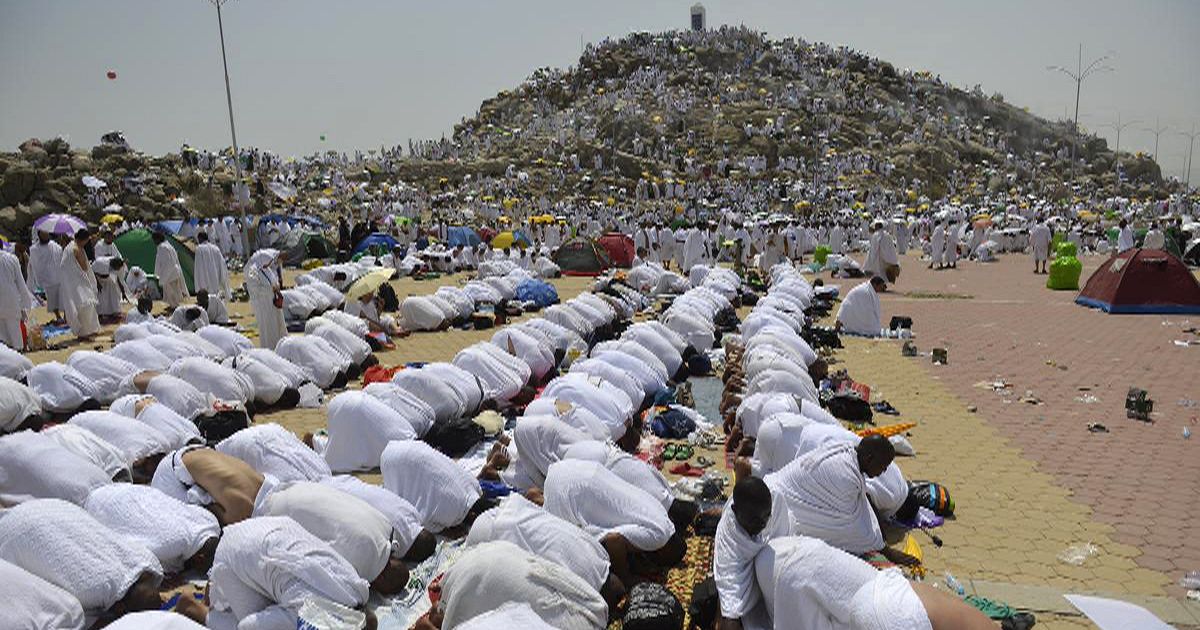
Thoughts on Islam in Morocco and the Role of its King as the Leader of the Faithful


Found this short note going through old grad school notes when I happened to be studying Islam in Morocco.  Perhaps I will expand upon it in the future.

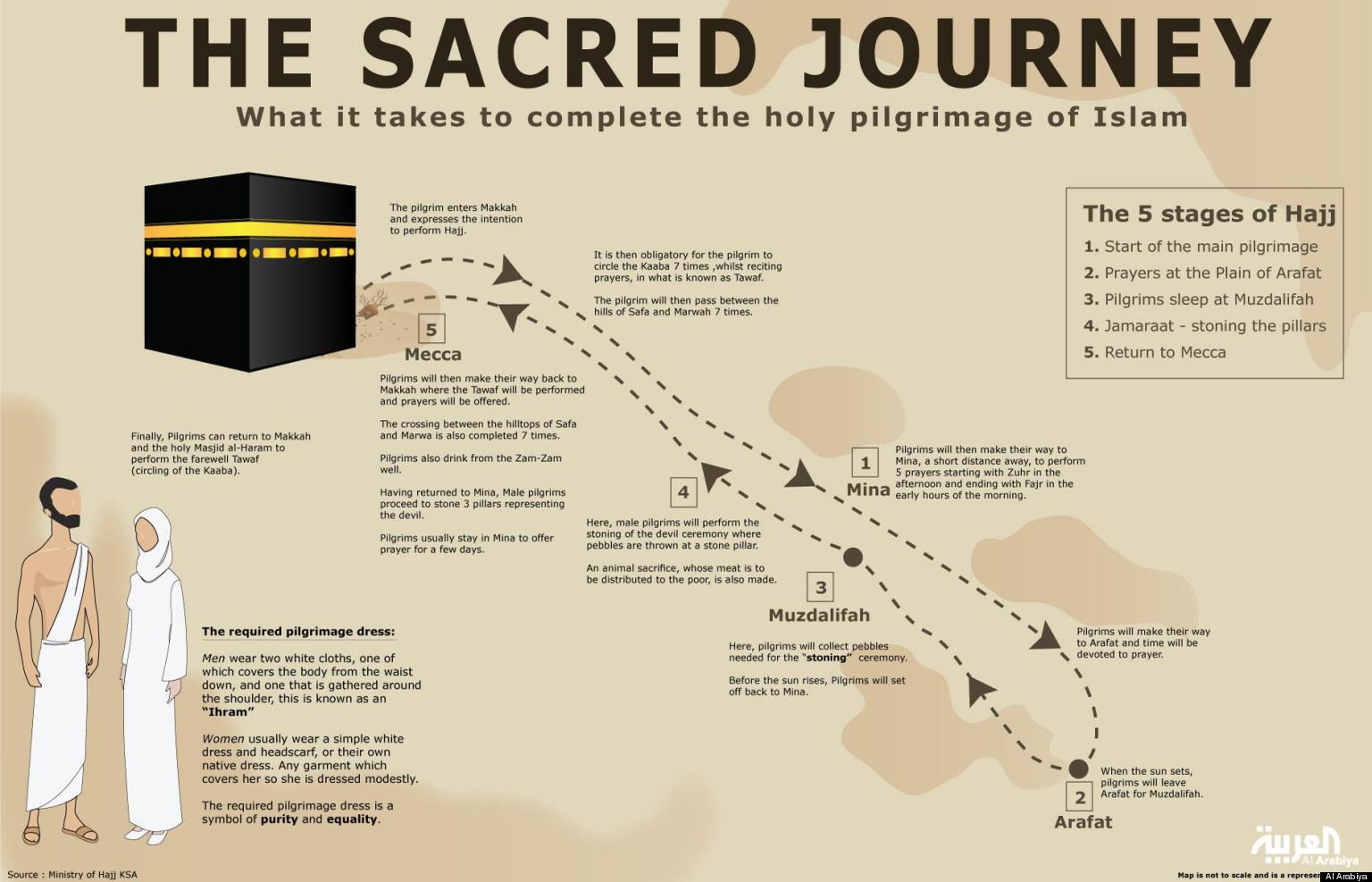
In a system of belief, one of whose pillars is submission to God (two other pillars include, making the journey  and charity),  can one man climb atop the shoulders of this belief –a belief that burns like hot coal in the heart of a nation—and effectively own the course of Islam in that nation?  

Can a political party?  

Can the fact of a man’s ancestors lift him above the beggars’ heads in Marrakesh? 

Surely charity lies in the heart
In the community of believers
Surely submission to God
Lies in the prostrate spirits
Surely making the hajj

Lies in the believers’ humble feet.


Thursday, August 22, 2013

Amazigh-State Relations in Morocco and Algeria

Amazigh-State Relations in Morocco and Algeria

Finally getting around to posting my thesis.  I've posted it as PDF below.


ABSTRACT:

As some of North Africa’s original inhabitants, the indigenous Amazigh population in
Morocco and Algeria has withstood waves of invaders to retain a distinct cultural and
linguistic identity that has persisted within—and despite—nearly fourteen centuries of
Arab rule. The emergence of Morocco and Algeria as modern nation-states following
their independence marked the beginning of an ongoing tension between each state and
its ethnic Amazigh minorities. With one state (i.e., Morocco) more inclusive and
progressive and the other more repressive and exclusionary (i.e., Algeria), what are the
factors that explain the different outcomes in both states?

This study compares the two movements in Algeria and Morocco by investigating
the relative salience of two central variables—that of each state’s institutions and the
behavior of its movements—on the outcomes for the Amazigh community. The major
finding is that state institutions stand as the most potent variable due to their ability to
channel movement strategies towards either militancy or accommodation. This power is
largely illustrated through Morocco’s reliance on cooptation as an initial response to
expressions of grievance that has produced a milder form of activism. In contrast, Algeria
has defaulted to a more repressive approach (to any dissent) that has produced a strident
activism with radical offshoots. Movement behavior continues to play a secondary role
that largely hinges on its ability to use globalization as an amplifying and mobilizing
instrument for international pressure.


https://docs.google.com/file/d/0B4BE1_xKfeEUTDlQc2c5UHRkVmc/edit?usp=sharing
Thursday, June 20, 2013

Abstract for my thesis: Amazigh-State Relations in Algeria in Morocco

25 SEP 2013 Update: Here's a link to my full thesis: 


Abstract for my thesis: Amazigh-State Relations in Algeria in Morocco

As some of the original inhabitants of North Africa, the indigenous Amazigh population in Morocco and Algeria has withstood waves of invaders to retain a distinct cultural and linguistic identity that has persisted within—and despite—nearly fourteen centuries of Arab rule. The emergence of Morocco and Algeria as modern nation-states following their independence from French colonial masters marked the beginning of a tension still apparent today between each state and its ethnic Amazigh minorities. With one state (i.e., Morocco) more inclusive and progressive and the other more repressive and exclusionary (i.e., Algeria), what are the factors that explain the different outcomes in both states?   


This study compares the two movements in Algeria and Morocco by investigating the relative salience of two central variables—that of each state’s institutions  (to include its political system) and the behavior of its movements—on the outcomes for the Amazigh community. The major finding is that state institutions stand as the most potent variable due to their ability to channel movement strategies towards either militancy or accommodation. This power is largely illustrated through Morocco’s reliance on cooptation as an initial response to expressions of grievance that has produced a milder form of activism. In contrast, the Algerian state has defaulted to a more repressive approach (to dissent of any kind) that has produced a strident activism with radical offshoots. Movement behavior continues to play a secondary supporting role that largely hinges on its ability to use globalization as an amplifying and mobilizing instrument for international pressure.  

Monday, May 13, 2013

CRS (R41957) The National Guard State Partnership Program (Kapp and Serafino)

The National Guard State Partnership Program: Background, Issues, and Options for Congress by Kapp and Serafino

This is a pretty cool program that not many people know about.  Basically state guard units pair up with other foreign countries.  

"The State Partnership Program (SPP) is a Department of Defense (DOD) security cooperation 
program run by the National Guard. It also serves as a mechanism for training National Guard 
personnel. Since the program began in 1992, it has expanded to the point where nearly every state 
National Guard participates, as do the National Guard of Guam, Puerto Rico, the U.S. Virgin 
Islands, and the District of Columbia."

Link to Report.


https://docs.google.com/file/d/0B4BE1_xKfeEUQ2RoMHFnMFZnSFE/edit?usp=sharing


Monday, May 6, 2013

Summary of 9 requests of the 2000 Amazigh/Berber Manifesto


In my thesis research I found that there's not a good summary of the 9 central requests anywhere (that I could easily find).  So I went through the lengthy and verbose "Berber Manifesto" and summarized its 9 main requests here.

Summary of 9 requests of the 2000 Amazigh/Berber Manifesto

First Request
The Amazigh nature of every Moroccan must be openly and freely debated at the national level.  The “alternance” government is ideally positioned to moderate with the Prime Minister as the leader.
The Second Request
 A constitutional recognition of Tamazight as an official and national language.
The Third Request
Government-sponsored economic affirmative action policies to be implemented on a temporary basis—focused on infrastructure, agriculture, industry, education and training—to bring them on par with the rest of the nation.
The Fourth Request
 Enforce the teaching of Tamazigh at all levels of the education system. Government support for the scientific study of the language to enable competent teaching of it.
The Fifth Request
Creation of a “national scientific commission” to develop a Moroccan (and maghrebian) history syllabus that includes and recognizes (not denigrates) the role of the Imazighen.  This commission shall operate apart from and independently from the ministers of education.
The Sixth Request
Institutionalize Tamazight within the public sphere to include: radion/tv, judicial system, public administration, health care system, local/regional government.  Train and employ Tamazight translators and interpreters to ensure equal access and use for all citizens.  End ban (whether official or not) on registration of Amazigh names in State Registry. 
The Seventh Request
The rehabilitation of Amazigh arts (i.e., literature, dancing, singing, architecture and ecoration) and equality of access and funding within the government (to a level on par with Arab peers).
The Eighth Request
Recognition of historical and given Amazigh names for locations (i.e., villages, cities and regions) in the nation instead of their replacement with Arabic ones due to arbitrary Arabization.  Rightful prioritization of Amazigh notables when naming public institutions (e.g., El-Khattabi is last on the list for avenue names).
The Ninth Request
Qualification of Amazigh cultural associations for official state financial assistance.   Equal financial assistance for publications promoting Amazigh heritage of Morocco as is received by ones in Arabic and French.


Sunday, December 16, 2012

Imazighen-State Relations in Morocco and Algeria


IMPORTANT NOTE: DON'T CHEAT. DON'T PLAGIARIZE. Notes and Papers are shared here for reference and for studying. Footnote as appropriate.

Imazighen-State Relations in Morocco and Algeria


BONUS LINK:  My entire (so far) grad school notes collection can be found here. 

Research Question

As ancient inhabitants of North Africa, the Berber populace has survived more than a millennium of invasions and myriad regime policies.[1]  Over the centuries their identity has oscillated between a proud ethnic one, a dormant marginalized one, an insular tribal one and one struggling for its voice in society.  Their ability to survive and to maintain a distinct ethnic identity throughout it all has largely been a product of negotiations and interactions with ruling regimes and an ability to balance an ethos of fierce resistance (and independence) with an evolving concept of their own group identity.  These group identities (i.e. the regional Berber tribes unique to Algeria and Morocco) have remained in various degrees of tension with a gradually developing Arab-Islamic identity since the Arab invasion in the 7th century.   During the battle for colonial independence, the Berbers consistently fought against the French and Spanish occupiers.  After independence, however, these two states each embraced unique forms of government and experienced subsequent, but varied, periods of political instability and violence due to regime changes and rebellion.  Throughout this process, Islamism (i.e. political Islam) developed and emerged as a major movement while a collective national identity superseded the Berber one for several decades.  This substrata Berber identity existed only passively until the rise of identity politics in the 1970’s.  An increasingly mobilized Berber movement would actively pursue language objectives beginning in the 1990’s and continuing into the new century.
In Morocco today the Berber movement remains strong but divided.  King Mohamed’s July 2001 creation of l’Institut Royal de Culture Amazigh (IRCAM) has created a split that still exists today with many members of the Amazigh Cultural Movement (MCA) refusing to participate in what they view as the monarchy’s attempt to co-opt and temper their movement.  Politically, Berber activists have increasingly rejected the loyalist Mouvement Populaire (MP); the most radical activists forming the Parti Democrate Amazigh Marocaine (PDAM) in 2005. This party was eventually banned by the Moroccan judiciary as illegal due to legislative prohibitions on regional or ethnic political parties.[2]  After the widespread protests fueled by the Arab Spring’s success in neighboring Tunisia, Egypt and Libya, the movement won recognition of Tamazight as an official language alongside Arabic.  Even this victory remains as subject of controversy with some in the movement lambasting it as only a token concession by the palace and part of a broader (and successful) effort to weaken the February 20th movement.[3] 
Despite being overwhelmingly concentrated in the Kabylie region of Algeria, the Mouvement Culturel Berbere (MCB) has been consistent in its longtime advocacy for linguistic and cultural recognition of Berbers as a whole versus Kabylia regionally.  This national outlook is not monolithic, though, in 2001 Kabyle singer and activist Ferhat Mehenni created the Movement for the Autonomy of Kabylia (MAK).  The MAK asserts that because the MCB and long-time Berber supported opposition political parties (e.g., Front des Forces Socialistes (FFS) and Rassemblement pour la Culture Democratie (RCD)) have all failed in effecting reform within the Algerian state as a whole, the focus should shift for reform at the regional level.  Based in Paris, however, the MAK remains an outlier, especially due to its pro-Israel stance.  Overall, the Berber movement in Algeria remains hamstrung in its efforts to promote a national agenda by its weak regional political base and geographic seclusion.  The future of the movement may hinge on its ability to leverage its demands for recognition of its cultural and linguistic autonomy with an agreement to cooperate in pursuing burgeoning Al-Qaeda in the Islamic Maghreb (AQIM) forces in the mountainous Kabylia regions.[4]
The past 40 years have witnessed considerable struggles for the sizable Berber minority populations in both states.  There is an opportunity to investigate the outcomes of these struggles vis-a-vis the Algerian and Moroccan state policies.  This examination of state-movement relations may explain the two very different outcomes for Berber populations in both states as affected by the state.  With one state (i.e. Morocco) more inclusive and progressive and the other more repressive and exclusionary (i.e. Algeria), what are the factors that explain these different outcomes?   Since the awakening of a Berber identity in the late 1970’s through the Arab Spring to 2012, has one factor been most influential and emerged most consistently, or are the explanations specific to time and state?   This thesis aims to identify the factors that influence Algerian and Moroccan state interactions with their Berber minority populations.


[1] Mordechai Nisan, Minorities in the Middle East : A History of Struggle and Self-Expression, Vol. Second Edition (Jefferson, N.C: McFarland, 2002), 54.
[2] Michael J. Willis, Politics and Power in the Maghreb: Algeria, Tunisia and Morocco from Independence to the Arab Spring (New York: Columbia University Press, 2012), 220-222.

[3] “North Africa’s Berbers Get Boost from Arab Spring,” The Cortez Journal (May 5, 2012).
[4] Ibid., 223-225.

Monday, December 10, 2012

Berber Language Map

In research for my thesis on the Berbers in Morocco and Algeria I have found it difficult to find good ethno-linguistic maps (online) of the Amazigh populations in north Africa.  To rectify that deficiency I will post any good ones that I find here:

This first one is a poor scan but I will post an improved one soon.


Tuesday, July 10, 2012

Sahel and North Africa Conflicts Explained: kind of...but not really...cool graphic at least


Sahel and North Africa Conflicts Explained: kind of...but not really...cool graphic at least
     This is a cool graphic that The Arabist posted on his website.  If nothing else, it shows the
complexity of the issues at hand in the Sahel and North Africa.  You should also check out The Arabist website--an excellent resource.


http://www.arabist.net/storage/thumbnails/812518-19057274-thumbnail.jpg?__SQUARESPACE_CACHEVERSION=1341245225915