FAO Quotables

"But being right, even morally right, isn't everything. It is also important to be competent, to be consistent, and to be knowledgeable. It's important for your soldiers and diplomats to speak the language of the people you want to influence. It's important to understand the ethnic and tribal divisions of the place you hope to assist."
-Anne Applebaum

Showing posts with label islam. Show all posts

Thursday, February 8, 2018

The Myth of Monolithic Islamism (Grad School)

IMPORTANT NOTE: DON'T CHEAT. DON'T PLAGIARIZE. Notes and Papers are shared here for reference and for studying. Footnote as appropriate.

My complete collection of Grad School Notes can be found here (Africa, IR, Ethnic Conflict, Economics, Writing, Islam, Comparative Politics).     

For most of the 20th century Islam, and its myriad political manifestations, has been widely misunderstood (and misinterpreted) by most western governments and politicians.  Prior to two world wars and a slew of “lesser” regional ones, Islam’s existence in many Muslim societies was subjugated—or relegated to an afterthought—by colonial governments and the international community (i.e. the League of Nations and the United Nations).  With independence, however, a wide range of differing approaches to governance emerged, sparking an evolution in thought as to Islam’s value, stature and relevance in Muslim societies that continues today.  An analysis of this Islamic worldview may prove a useful tool for policymakers to better interact with and understand many Muslim states.  How have Islamists viewed the general Muslim condition in society over the last hundred years?  How have they diagnosed the associated problems of the conjoining of Islam and government?  What solutions have they offered and pursued?  I argue that the Islamist evaluation of the Muslim condition at large has been and remains a nuanced response to political environments.  The wide array of local conditions and grievances has elicited a wide-range of solutions, some more permanent but all influential to this day.  I begin by defining Islamism within the context of 20th century, as well as its roots.  Then I examine key shifts in Islamism throughout the time period through a discussion of central Islamic revivalist figures.  This examination ends with the rise of radical Islamism, as well as responses to it. Finally, I evaluate the efficacy of the different approaches and the different solutions offered and realized.  In particular, I focus on Ayatollah Khomeini in Iran, the Muslim Brotherhood in Egypt, and Mawdudi in Pakistan.

Sunday, January 10, 2016

Thoughts on Islam in Morocco and the Role of its King as the Leader of the Faithful


Found this short note going through old grad school notes when I happened to be studying Islam in Morocco.  Perhaps I will expand upon it in the future.

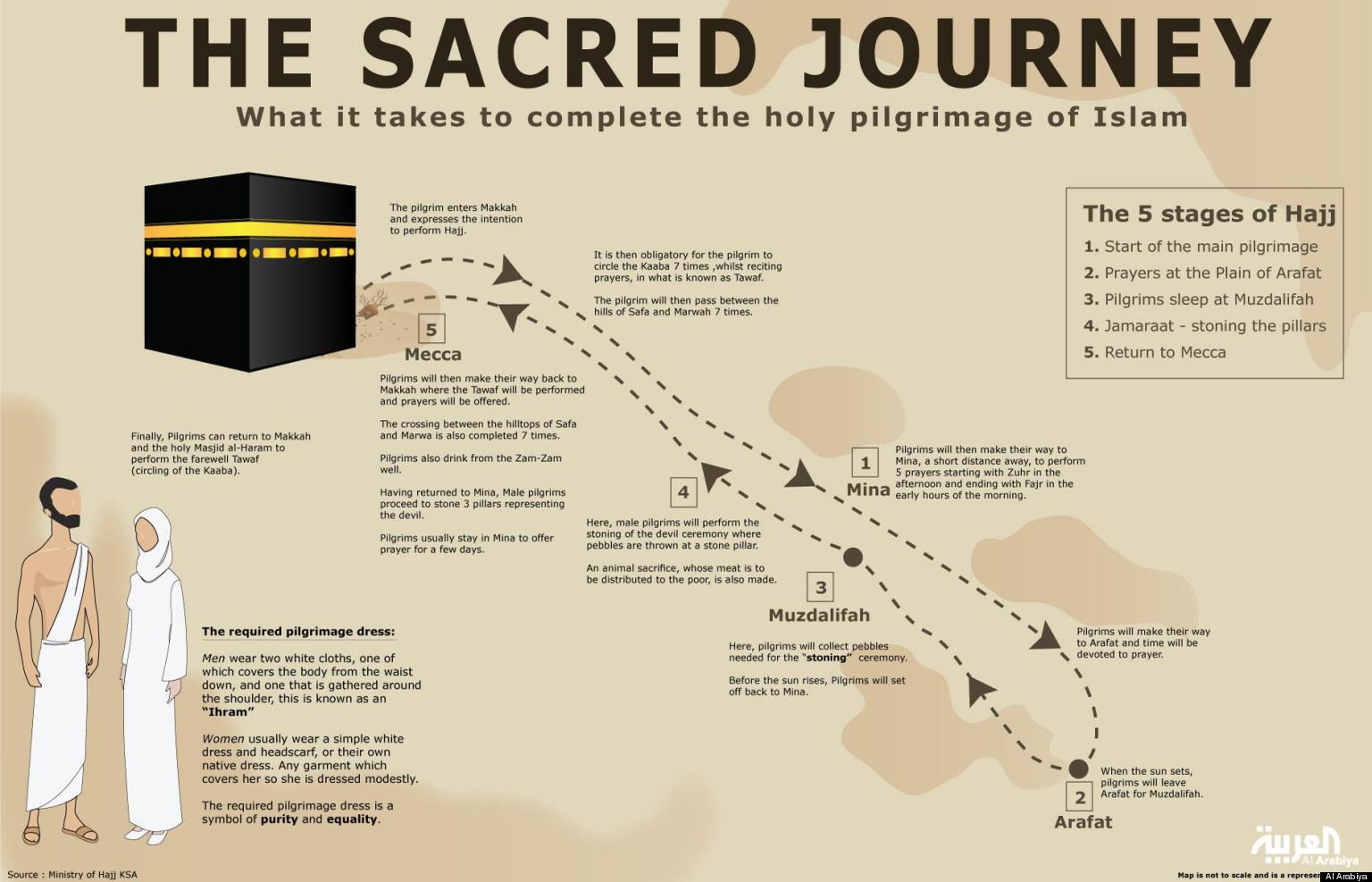
In a system of belief, one of whose pillars is submission to God (two other pillars include, making the journey  and charity),  can one man climb atop the shoulders of this belief –a belief that burns like hot coal in the heart of a nation—and effectively own the course of Islam in that nation?  

Can a political party?  

Can the fact of a man’s ancestors lift him above the beggars’ heads in Marrakesh? 

Surely charity lies in the heart
In the community of believers
Surely submission to God
Lies in the prostrate spirits
Surely making the hajj

Lies in the believers’ humble feet.


Saturday, November 28, 2015

Weekly Reading List: African Borders, A Cure for Blindness, Family, Wine, Fish and a Muslim State

The "Real" Map of Africa: Redrawing Colonial Borders
The age old question.  And an article that examines the important question of territorial sovereignty as a function of state legitimacy.

In 5 Minutes, He Lets the Blind See

Project cure.  I am hard pressed to see a better way to spend $100.  

Review: Michel Houellebecq’s ‘Submission’ Imagines France as a Muslim State

Yeah, the title of the article says it all.  Not an impossibility 100 years from now.  

A Poor Man’s Guest in Addis Ababa

A lovely little vignette that captures the special relationship enjoyed by the children of ex-pats and their household help.

Why the Best War Reporter in a Generation Had to Suddenly Stop

CJ Chivers is pretty much the man when it comes to reporting and this is an amazing tribute to him but also to the importance of family. 

What to do with 36 hours in Capetown

Quick summary--a ton.  If you are an American, South Africa is pretty much the most awesome place to vacation right now.  The dollar is super strong--you can live like a prince there.  An amazing dinner for two with apps, dinner, dessert, bottle of wine at a nice restaurant will run you maybe $40...it's crazy--why haven't you bought your plane ticket yet.

In Sicily, Tasting Seafood With a Skeptical Son

Beautiful little vignette on Sicily but also father-son relationships.

Setting the Oven to ‘Broil’

Can't hate on the good old broil.


Friday, January 4, 2013

Grad School Notes Collection (Africa, IR, Ethnic Conflict, Economics, Writing)


IMPORTANT NOTE: DON'T CHEAT. DON'T PLAGIARIZE. Notes and Papers are shared here for reference and for studying. Footnote as appropriate.

Grad School Notes Collection (Africa, IR, Ethnic Conflict, Economics, Writing, Islam, Comparative Politics)

Below are the links to all the notes I have previously published here on FUUO.  They are organized into a few areas: Africa, IR, Islam

AFRICA:

Notes (Discussion) Iliffe’s Africans: The History of a Continent

Notes (Extensive) on Iliffe's Africans

Notes (Partial) on Paul Nugent’s Africa Since Independence

Notes and Summary: Achebe's Arrow of God

Notes (Discussion) and Summary: Achebe's Arrow of God

Notes (Discussion) and Summary Anthills of the Savannah 

Notes (Discussion) and Summary: Achebe's Man of the People

Notes (Discussion) and Summary: Achebe's No Longer At Ease

Notes (Discussion) and Summary: Achebe's Things Fall Apart

Notes on Rye Barcott's It Happened on the Way to War

Notes/Summary (Partial) on Getting Somalia Wrong: Faith, War, and Hope in a Shattered State by Mary Harper (her blog is GREAT)

Notes on Hartley's The Zanzibar Chest

Notes on Democratization in Africa (Ottaway, Joseph, Bratton & Walle)

Notes on African Judicial Systems (Akech, Von Doepp, Suberu)

Notes on Clientelist State-Society Relations(Barkan, Fatton, Pitcher et al)

Notes on African Elections as Vehicles for Change by Nic Cheeseman

Notes on Patrimonialism in Africa (Theobald, Bach, Pitcher and Moran)

Notes (Brief) and Discussion Questions on Bradbury's Becoming Somaliland

Notes (Partial) on Gallab's The First Islamist Republic 

http://fuuo.blogspot.com/2012/09/biopoliticsertireasomaliaokane.html

Notes for Debate Arguing that Counter-Piracy HAS been effective in the Horn of Africa
Paper on Libyan Coalition/Intervention


Paper reviewing and analyzing "Sometimes in April"
http://fuuo.blogspot.com/2012/03/i-wrote-earlier-footnoted-version-of.html

Paper (Average Grade) on British and French Colonial Legacies in West Africa
http://fuuo.blogspot.com/2012/07/essay-on-british-and-french-legacies-in.html

Paper on the Unexpected Pattern of Democratization in Africa
http://fuuo.blogspot.com/2012/10/the-pattern-of-democratization-in-africa.html

Paper on Copts in Egypt: A Wedding Feast for Copts and Christians
http://fuuo.blogspot.com/2012/09/copticchristianegyptembassycairo.html

Poem: The Guilt of the Silent: An Analysis of Raoul Peck's "Sometimes in April"
http://fuuo.blogspot.com/2012/02/guilt-of-silent-analysis-of-raoul-pecks.html


Endnotes for Sometimes in April/Rwanda Genocide Analysis Paper


EVENTS:

Notes from 2010 Maritime Safety and Security Conference "African Maritime Interests: Security and Development" Plenary Session 1

Notes from MSS Conference Speech by Ambassador Huddleston Speech
http://fuuo.blogspot.com/2010/10/mss-conference-ambassador-huddleston.html

Notes from MSS Conference Speech by Ambassador Carson

MSS Conference Keynote Speech by AU Deputy Chairman Dr. Mwencha
http://fuuo.blogspot.com/2010/10/mss-conference-keynote-speech-by-au.html

Notes on Senator Isakson's Speech at SAIS on 31 March 2011
http://fuuo.blogspot.com/2011/04/senator-isaksons-speech-at-sais-from-31.html


INTERNATIONAL RELATIONS:

Notes for entire IR Course


Notes on Mearsheimer and Walt's "An Unnecessary War"
http://fuuo.blogspot.com/2012/08/notes-on-mearsheimer-and-walts.html

Notes on Stephen Walt's The Relationship between theory and policy in IR, 2005
http://fuuo.blogspot.com/2012/08/notes-on-relationship-between-theory.html

Notes on Stephen Walt's "IR: One World, Many Theories" (1998)
http://fuuo.blogspot.com/2012/08/notes-on-stephen-walts-ir-one-world.html

Paragraph on Libya as a Case Study in Developing a Democracy from Scratch
http://fuuo.blogspot.com/2012/08/libya-as-case-study-in-difficulty-of.html

Paragraph on Twitter as the New Nuke and the Convergence with Technology
http://fuuo.blogspot.com/2012/08/twitter-as-new-nuke-and-convergence.html

Pargraph on The Dangers of Half-Hearted IR Policy Implementation
http://fuuo.blogspot.com/2012/08/on-dangers-of-half-hearted-ir-policy.html

Paper on Considerations for a US Response to an Alien Communication Signal
http://fuuo.blogspot.com/2012/08/thoughts-on-us-response-to-alien-signal.html

WRITING:

How to do a Literature Review

In Praise of Refworks--The Best Reference Management Tool?

How to Write an A+ Paper in Grad School

Paper (presentation) on the importance of revision

ETHNIC CONFLICT:

Notes on "The Enduring Power of Ethnic Nationalism" (2008) by Muller

Notes on “From a Theory of Relative Economic Deprivation (RED) Towards a Theory of Relative Political Deprivation”  by Walker Connor (2001)

ECONOMICS:


Notes on Have and Have Nots-African Style by Pascal Zachary

Notes on Economic Geography of Regional Integration (Gill &Deichmann)


ISLAM: 

Notes on Origins of Islam

COMPARATIVE POLITICS:

Notes on Social Theory and Comparative Politics (CP) by Mark Lichbach

VIETNAM/DECISION-MAKING:

Paper on the Gulf of Tonkin: "The Gulf of Tonkin Resolution: A Response to Which Campaign?"

Thursday, October 4, 2012

Origins of Islam Notes


BONUS LINK:  My entire (so far) grad school notes collection can be found here. 

Origins of Islam Notes

- Koran was written in its entirety during Prophet’s time
- Hadith: statements attributed to the Prophet
- Sura = chapter
- Revelation occurred during 23 year span: 13 years in mecca; last 10 years (medina era) in Hadija? Laws were revealed during this time period.

The distinction between scholar and student looms large in Islam.

- Muhammed born in 570 AD  
- 622 AD defining moment of Islam (Islamic Year 1 AH After Hijra or migration from Mecca (Makka) to Madina—formerly called Yehtrib—inhabitants changed it to the city of the Prophet which was then shortened to just Madina)

* Ethos of region at the time was all tribal (with exception of Makka and Madina) and very warfare-centric/raiding-centric (and placed low value on women)
- Madina had lots of water and was an agricultural society (dominated by two warring tribes: Aws and Khazrag, and Jewish population also coexisted). 
*Arabs were pagans at this point
- Makka is a valley with little water or cultivation and this is where Abraham left Ishmael.  Here there is Kabba as the first place of worship on earth (a rectangle structure) that predated Islam.  It was a ritualistic pilgrammage/tourist site (month of pilgrammage is the last month of the Muslim calendar) where the idols of multiple gods were placed.  City was controlled by two families: Banu Hashim (Muhammed’s family and the custodians of the mosque) and Banu Umayya (his cousins and the merchants of the city). 
*Makka was the market as the halfway point between Yemen and Sham (Levant).
M started out as a shepherd and then shifted to working for merchants in that trade.  Khadjia was a wealthy older woman (40s) who hired people to take her goods to sell—she brokered a deal with M to carry her wares.  After a while they marry (he’s about 20 years younger).  This is the beginning of his rise in society.  In the off-season, when he was 40 (610), he received his first revelation in a different linguistic form of Arabic—which is catchy and unique.   At first this is met with skepticism, but he slowly gains followers—initially these are the weaker parts of society.  Powerful in Makka don’t like what he’s saying since he’s speaking out against prostitution and usury etcthey don’t want there to be just one god because it would cut down on the number of pilgrammages

NOTE:  While most were pagans, some held an Abrahamic sense of religion—Ahnaf (monetheist)—reflective and intellectual—this is what M’s family followed.  However, it did not have a system of rituals and beliefs. 

One of his first followers was someone named Ali (father of Shias)—he was  foster child of M and his cousin.  He did this as a favor to his uncle who was destitute and had helped M out at the beginning (Ali later married M’s daughter Fatima).  Another major follower was Abu Bakr (one of the first caliphs in the future). 

Monday, October 1, 2012

Partial Notes on the Gallab's "First Islamist Republic" (Sudan)

BONUS LINK:  My entire (so far) grad school notes collection can be found here. 

Below are my partial notes on The First Islamist Republic by Abdullahi A. Gallab.


Adullahi A. Gallab, The First Islamic Republic (Ashgate, 2008)

THESIS: Sudanese experience shows that Islamism (and all other ‘isms’) can and should be contested.

Introduction
Sudan was one of the 1st African countries to gain independence but the last 50 years have been a dismal failure.

The Birth of the First Islamic Republic
- in the first coup (30 June 1989) Al-Bashir (in Sudanese Defense Force) colluded with Ali Uthman Muhammad Taha (NIF) and Al-Turabi to overthrow Sadiq al-Mahdi but deliberately jailed Turabi and others to mask the fact that it was an Islamist coup.  They wouldn’t admit this till al-Bashir was deposed 10 years later. 
- This 10 year rule was a ‘reign of terror’

Revolution in the Sudan
- 1989-1999 revolution-like period at least
- Rise of dictatorial rule that used oppression to establish Islamist model distinct to al-Turabi’s Islamists ideas and state theories

About the Islamists
- What does Islamist mean?  Better to use “political islam”?  How do we use the term “fundamentalism”? 
- Since 1928 emergence of Society of Muslim Brothers (Hasan al-Banna), local ideological groups have evolved such as Sudanese Islamists.
- al-Turabi has led movement since 1964 through a number of variations of governance and political structure that continues to present

The Islamist State in Sudan
- Islamists in Sudan see themselves as making a fundamental break with Sudan’s past and the world at large
- National Charter for Political Action (1987) is a blueprint for radical change both regime-wise but also for an alternative society.
- first Islamic state was an embodiment of the comprehensive call which meant forcing people into “righteousness”
- With the coup one sees a fusion of Islamism and totalitarianism in the state’s rule and ideology

Chapter 1: Reflection on Islamism in Sudan
- al-Turabi overstepped in his initial aspirations for the way in which Islam in Sudan would become a global force and phenomena—a pan-islamic international order
- from base (qaeda) in Khartoum, they granted citizenship to Islamists from all over and formed two strategies:
            * Destabilize un-Islamic muslim and arab states and replace them
            * Claim leadership of world Islamic movement thru “Islamists Comintern” (under auspices of PAIC)
- within Sudan they violent suppressed all over religious groups to include muslims that fell outside their particular brand

The Islamists within the Sudan’s Social World
- Spirit of independence (and “invention of locality”) as an idea of cultural and historical continuity in Sudanese life
- Always viewed as separate from Egypt—this was characterized by Muhammad Ali’s invasion in 1820-1.  Sudan was primarily used to hunt for slaves and for resources.  However, inside Sudan fissions began to form along religious lines

Redrawing the Economic and Socio-Political Map
- 3 periods: british conquest in 1898, independence in 1956 and early years of Nimairi regime
- British failed to create modern state but did introduce Sudan to international system
- Independence Nimairi modeled nation after Nasser’s Arab Socialist regime (expansion of public education, transportation and comm.)
- Early Nimairi period saw crackdown on political parties, nationalization of financial institutions...
- peculiar nature of condominium composition: Britain’s unprecedented partnership with semi-colonized African state (Egypt) to colonize another country
- historically then, most northerners shared religion, language and some culture with Egyptians
- during colonial period, infrastructure and economy was developed (mainly in the north) to fracture dependence on Egypt—it basically gave them the tools/structures to for a nation-state.
- evolution of Sudanese identity: sacredness of Arabic language in relation to Koran; development of Arabic print journalism; spread of  Egyptian Arabic books and magazines and journals; orthodox islams as state religion; Arabism as major force.

Chapter 2: Elementary Forms of the Islamist Movement
The Elementary Form of the Movement
- Most say the movement is not connected to the Muslim Brotherhood in Egypt and is self-made and novel
- Author argues that no trends were novel or original in origin
The Anatomy of the Islamist Movement
Determinants and the Course of the Islamist Movement

Chapter 3: Competing Visions in the Aftermath of the October Revolution
The Emerging Field of Power
Who is Hasan al-Turabi?
The Coup as Mode of Change

Chapter 4: From the Corporation to the Coup
Property, Power and Violence: The Islamists’ Pattern of Stratification
The Trail of Violence
The Hijra to the Camp
The Hijra to the Campus
The Migration to the Land of Plenty

DISCUSSION NOTES:

The first thing is the Nile and the way it ties it to Egypt moreso than any other country in Africa.  So it’s integrated historically.

- Ottoman Trachia is first conquest of Sudan (with help of Egypt).  Out of this period comes the Mahdist regime in the late 19th century.  Condominium follows this regime (overthrows it). 

Brits felt very threatened by Sufi Islam and so they integrated Islam into the colonial state to resolidify more orthodox elements of Islam. 

Politics have always been sectarian (not ethnic).  There have always been two parties that agree on Arab-Islamic Sudanese identity and that Sharia law should be used—but they disagree on how to implement and govern.  These two parties are Democratic and Umma parties (though their names go through many variations). 

Al-Bashir claims to be democratic but a more vanguard, democratic rule by the intellectual elite. 

Turabi is much more vanguard—he’s much more set on remaking society to his idea and then letting it choose his idea democratically after the fact.  Agenda of first republic is of Islamization and Arabization.  Their jihad is very complex—defeating the southerners first and then changing them to self-identifying Islamic Arabs. 

During the 10 year period, Turabi treats the civil war with south as a jihad.  He was always a real believer in his agenda—it wasn’t just about staying in power like with al-Bashir.  Turabi had a lot of support out of Darfur but his base was always at the university level.  He’s ultimately unsuccessful because he’s kicked out by Bashir in 1999.  Since then he continues to be a thorn in their side (even now at the age of 80).

Bashir doesn’t have much of an agenda now except to stay in power

*Arabization means Arabic is the official language and it’s taught in all the schools

Why did Bashir allow Turabi to create the PDFs?

Sudanese politics are always about the following agendas:
Assimiliation
Territorial integrity
*But they are pragmatic always
*Biggest issue after secession is the new periphery is closer with the lower 1/3 lopped off.  The periphery is closer and easier for Khartoum to marginalize and effect. 

*The three areas never voted on whether they were joining the north or the south.  The SPLA basically sold out those three areas because they were just concerned with getting the secession of the South.

- Post-Bashir Sudan is the biggest question!

- Paradox of Sudan is that it has a good democratic structure but that it’s always under military autocratic rule

- South was never secessionist until they found oil.  It was never a North-South problem but always a Center-Periphery problem (John Gareng).